
The Right Pellet Stove Depends on Your House, Not a Top-10 Badge
Narrow candidates by heating load, budget and floor plan, then compare EPA records, installed prices, service, noise and cleaning access.
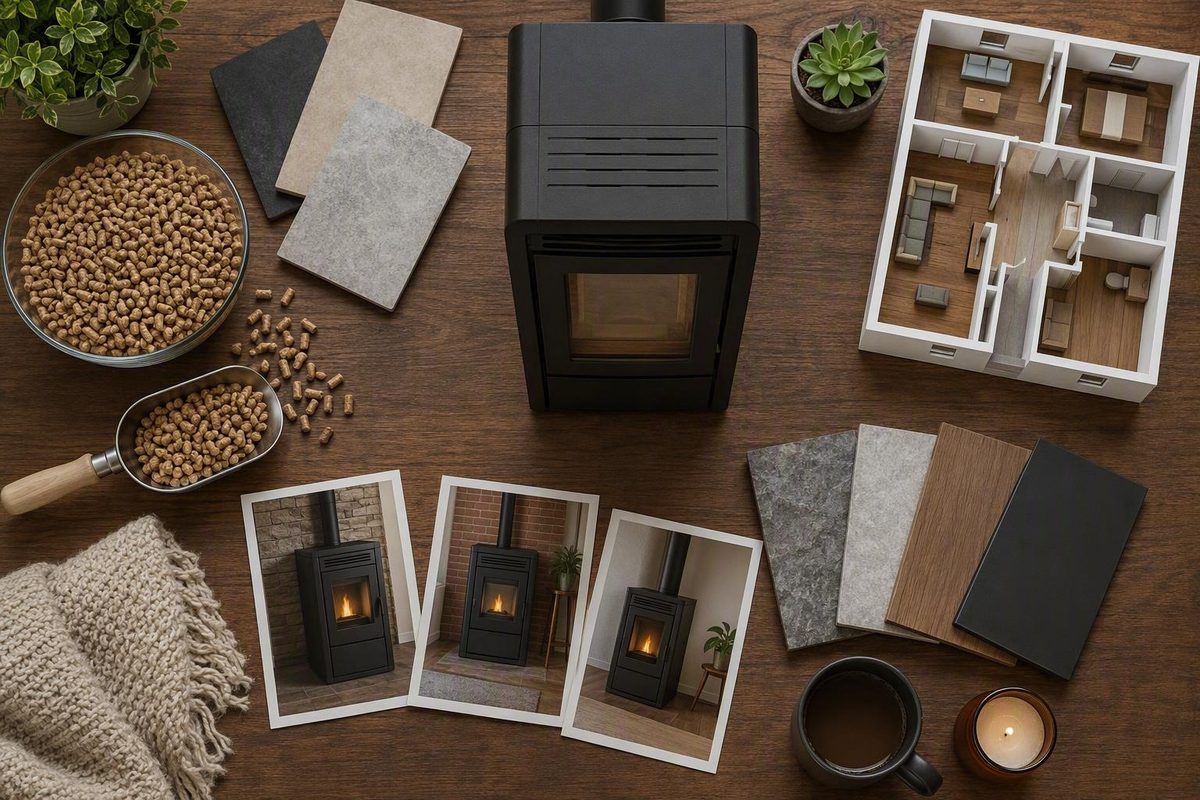
There is no pellet stove that is demonstrably best for every home. Start with two or three candidates suited to your heating load, budget, floor plan, installation constraints, outage risk, and tolerance for maintenance. Then compare current EPA records, itemized installed prices, warranties, local service, parts availability, noise, and cleaning access. The available evidence does not provide normalized head-to-head data for output, reliability, repair frequency, sound, and lifetime cost, so every named model below is a candidate to investigate—not a universal winner.
The short answer: strong candidates by buyer scenario
The first four rows come from a Tractor Supply retailer ranking; the Harman row comes from one New York retailer’s freestanding pellet-stove listings. These are stove-only snapshots, not installed quotes or standardized test results.
| Buyer scenario | Candidate and price snapshot | Reported evidence and source type | Questions to resolve |
|---|---|---|---|
| Value with conventional controls | ComfortBilt HP22-BROWN — $2,399.99 | Retailer listing: 55-pound hopper, 4.7 rating from 68 reviews, and claimed coverage up to 2,800 square feet | Heating-load fit, noise, repair history, local service, parts lead times |
| Large hopper at a lower price | Forge & Flame PP130-B-DS — $1,499.99 | Retailer listing: 130-pound hopper and 3.9 rating from 1,630 reviews | Burn rate, cleaning access, ignition reliability, warranty support |
| Outage resilience | US Stove Wiseway GW1949 — $999.99 | Retailer and editorial descriptions: gravity feed without electric pellet feeding | Current EPA status, exact electrical needs, heat control, venting, installation fit |
| Connected controls | Cleveland Iron Works F500205 — $1,545.99 | Retailer listing: 130-pound hopper and built-in Wi-Fi | Control-board reliability, app support, repair cost, technicians, parts |
| Premium comparison point | Harman P43 — $4,449; P61 — $5,179; P68 — $5,789; Absolute63 — $6,069–$6,769 | Retailer product-category page; prices may reflect particular configurations | Whether the higher price buys better local support, quieter operation, reliability, or lifetime value |
The HP22-BROWN’s 4.7 rating comes from 68 reviews, while the PP130-B-DS has a 3.9 rating from 1,630 reviews. The average rating and the number of contributors measure different things. Neither establishes long-term reliability, and the retailer’s review summaries are not a substitute for controlled testing.
Bob Vila identifies the ComfortBilt HP50 as its top overall editorial pick. That guide discloses affiliate relationships and says it considered brand history, reputation, and reported features, but it does not provide complete normalized testing across every contender. The HP50 is therefore another candidate-generating opinion, not a proven winner.
Hopper size matters, but it does not establish runtime by itself. Runtime also changes with burn rate, heat setting, pellet quality, weather, and the building’s demand. Likewise, Wi-Fi has value only if the controls remain supported and repairable. A gravity-feed mechanism can reduce reliance on electric pellet feeding, but buyers must still verify the exact stove’s manual, certification status, venting, and operating requirements.
Size the heating job before comparing stove claims
Do not choose capacity from an advertised square-foot figure alone. The intended role also matters: heating one central living area is different from serving as the house’s primary heat source.
Begin with a professional energy assessment or a basic DIY inspection. Check for leakage around attic penetrations, doors, windows, rim joists, and utility openings, and assess insulation before choosing equipment. The Department of Energy estimates that sealing uncontrolled air leaks can reduce heating and cooling bills by 10% to 20%. That is an air-sealing estimate—not a pellet-stove savings claim—and actual results vary by house. DOE’s Energy Saver guide recommends an energy assessment as the starting point for prioritizing improvements.
For final sizing, ask a qualified heating professional to assess the home’s heating load rather than relying on a generic square-foot-to-BTU formula. Record the following before requesting dealer quotes:
- Climate and typical winter temperatures
- Rooms or zones the stove must heat
- Floor area, ceiling heights, and window condition
- Open or compartmentalized layout
- Insulation and known air leakage
- Existing heating system and fuel
- Intended role: primary, supplemental, or emergency heat
- Proposed stove location and likely paths for warm-air movement
The largest maximum-output rating is not automatically best. The stove must also operate comfortably during milder weather.
Distribution is a separate problem. No advertised coverage figure resolves that floor-plan issue.
Compare the specifications that affect daily ownership
Use the same worksheet for every exact model:
| Category | What to record | Why it matters |
|---|---|---|
| Heating performance | Output range, lowest usable setting, load-assessment fit | Helps prevent inadequate heat or an overheated stove room |
| Hopper and fuel | Capacity, compatible pellets, loading height | Affects refill frequency and accessibility |
| Controls and power | Thermostat, scheduling, Wi-Fi, manual controls, startup and running power | Determines convenience and outage planning |
| Ownership support | Noise, cleaning access, warranty, service, parts, installation format | Affects daily use, downtime, and total project feasibility |
Consumer Reports says its stronger tested stoves heat quickly, operate for at least 24 hours before refilling, and are comparatively easy to load and clean. These are useful benchmarks, but they do not establish that every shortlisted model meets them. Its pellet-stove buying guide also notes that model-page efficiency and emissions figures are manufacturer-reported rather than independently tested by Consumer Reports.
Noise remains a significant unknown because the available comparisons do not provide standardized model-specific sound measurements. If possible, listen to the exact stove at low and high output. Note steady blower noise, pellet-feed sounds, vibration, and changes during ignition and shutdown.
Before paying a deposit, obtain:
- The exact manufacturer and model number
- The complete written warranty, including labor exclusions
- The local service provider’s name and contact information
- Confirmation of who processes warranty claims
- Availability of igniters, sensors, motors, fans, gaskets, and control boards
- Expected lead times and uncovered diagnostic or travel charges
A long warranty is less useful when no nearby technician will honor it. A simpler stove with accessible parts and competent local service may be more practical than a feature-heavy model with limited support.
Verify the exact model in EPA’s database
Open the EPA Certified Wood Heater Database immediately before purchase and search for the exact manufacturer and model shown on the appliance paperwork. Then:
- Match the manufacturer and model designation to the label and manual.
- Confirm the listed fuel and heater type.
- Review the efficiency, particulate-emissions, and carbon-monoxide fields.
- Check whether the record says the model meets the 2020 Step 2 emission limits.
- Save the record with the purchase documents.
- Resolve conflicts among the database, label, manual, and dealer paperwork before paying.
EPA certification establishes compliance with applicable federal emissions requirements. It does not rank reliability, safety, quietness, heating comfort, dealer service, or overall value.
Current verification matters because EPA has documented certification-testing deficiencies that can lead to retesting, denial of an application, or certificate revocation. The agency’s wood-heater compliance program explains that certification records can be affected by testing or documentation problems. EPA also asks manufacturers to review database entries for accuracy.
Do not assume that any shortlisted model is currently certified merely because a retailer displays a badge or an older article describes it that way. Confirm the live record for the exact model.
Budget for the installed system, not just the stove
A $1,500 stove is not a $1,500 heating project. Consumer Reports gives a dated general stove-price range from just under $1,000 to more than $5,000 before installation and cites an installation estimate of roughly $1,000 to $3,500, with substantial variation by region and project.
Build an itemized budget:
| Project item | Quoted cost | Notes or exclusions |
|---|---|---|
| Appliance and options | $______ | |
| Vent components | $______ | |
| Installation labor | $______ | |
| Permits and inspections | $______ | |
| Floor or wall protection | $______ | |
| Electrical work | $______ | |
| Delivery and placement | $______ | |
| Backup power | $______ | |
| First pellet order | $______ | |
| Cleaning equipment | $______ | |
| First annual service | $______ | |
| Contingency | $______ | |
| Total project cost | $______ |
Ask competing installers to quote the same scope. One proposal may include delivery, startup, permits, and initial service while another covers only the appliance and basic labor.
Do not calculate savings until you know the local delivered pellet price, expected consumption, electricity use, annual service cost, and how much existing fuel the stove would actually displace. Do not subtract a tax credit or rebate unless current official rules confirm eligibility for the exact model, purchase date, installation date, and household.
Confirm installation, maintenance, and outage fit
Professional installation is advisable because stove weight, venting, clearances, floor protection, electrical supply, permits, and local codes can affect operation and safety. The installer should follow the manual for the exact model and configuration rather than improvised generic instructions.
Choose between a freestanding stove and an insert only after confirming fireplace or chase dimensions, vent route, liner requirements, clearances, and service access. In one Hearth.com discussion about a framed drywall chase, participants generally favored freestanding stoves for greater choice and potentially simpler venting. That was anecdotal advice about one project, not a universal installation rule.
Recurring ownership work commonly includes:
- Scraping and inspecting the burn pot
- Removing ash and cleaning the glass
- Cleaning heat-exchange surfaces
- Maintaining the exhaust path and venting
- Inspecting gaskets and moving components
- Arranging periodic professional inspection and deeper service
Intervals depend on the model, pellet quality, and usage. Before buying, open a display stove and confirm that you can reach the parts its manual expects you to clean.
Most pellet stoves depend on electricity for some combination of the auger, igniter, electronic controls, combustion fan, and room-air blower, according to Consumer Reports. Outage-prone households should determine the exact startup and running loads before selecting a battery system or generator. A gravity-feed stove that avoids electric pellet feeding may reduce that dependence, but do not assume the entire appliance is electricity-free without checking its current manual.
Use this final go/no-go checklist:
- [ ] A compliant vent route has been identified.
- [ ] Clearances and floor protection have been confirmed.
- [ ] The permit and inspection path is understood.
- [ ] There is adequate dry pellet storage.
- [ ] Someone can handle commonly sold 40-pound bags, or an alternative handling plan exists.
- [ ] The cleaning schedule is realistic.
- [ ] Operating noise has been heard or explicitly considered.
- [ ] Qualified local service and common replacement parts are available.
- [ ] The exact EPA record has been checked.
- [ ] The complete installed quote fits the budget.
- [ ] A workable outage plan is in place.
If regular cleaning, pellet handling, dry storage, operating noise, local repair access, or backup power cannot be accommodated, another heating system may be the better choice.
Select two or three candidates that fit the home’s measured heating demand and the household’s ownership priorities. Compare their installed quotes, current EPA records, written warranties, local service, pellet availability, cleaning access, and outage requirements side by side. The best purchase is the stove that fits the house and can be maintained locally—not the model with the loudest ranking.