
Cheap Wood Pellet Fuel: Compare the Cost at Your Door
Find cheaper heating pellets by comparing delivered cost, bag weight, approved fuel and storage—not just the lowest advertised price.
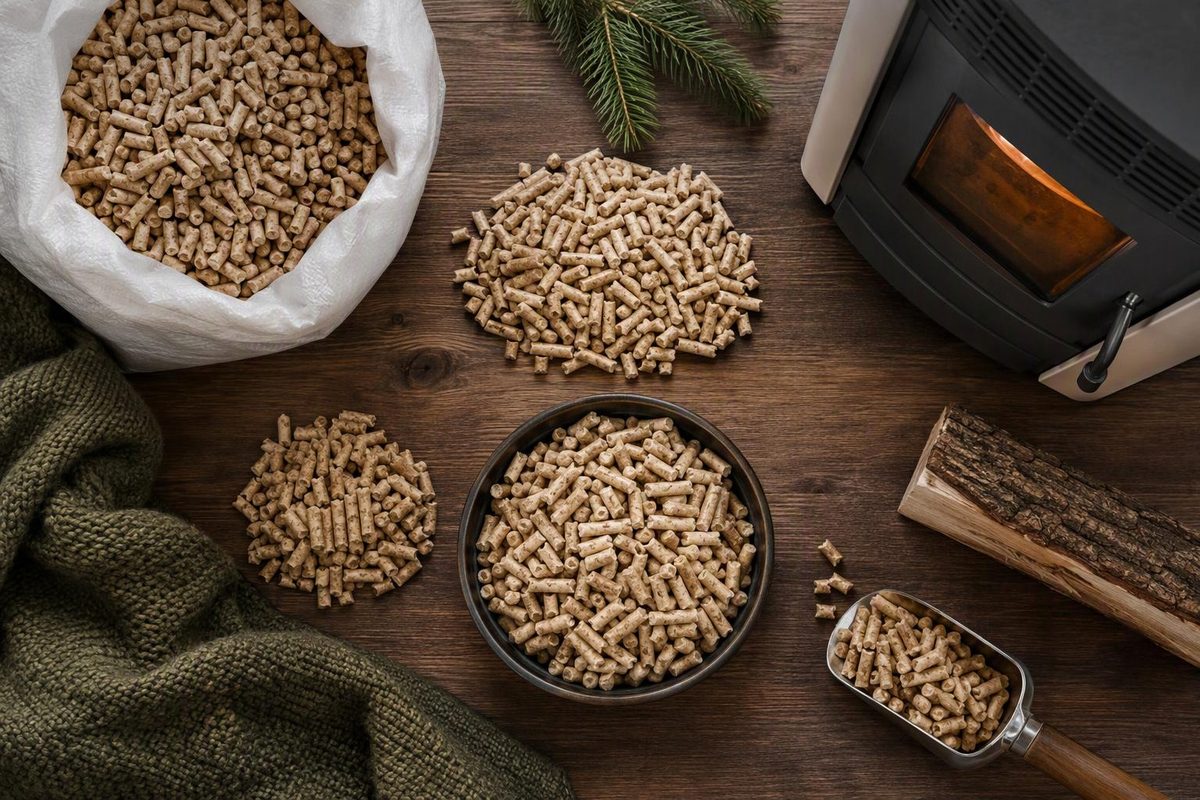
The best cheap wood pellet fuel is the lowest-cost fuel that meets your stove’s requirements, arrives dry and burns acceptably in your appliance. Start with the total cost at your home—not the bag price or an online national average.
For U.S. buyers, compare local pickup and delivery quotes on a 2,000-pound short-ton basis. Then test unfamiliar fuel before committing to a winter supply.
Put every quote on the same basis
A short ton contains 50 bags weighing 40 pounds each. A pallet is a shipping unit, not a guaranteed ton: check the bag count and total weight.
Use this calculation:
Cost per ton at home = (fuel price + delivery + applicable tax + pickup costs − discounts) ÷ short tons purchased
For pickup, include the vehicle or trailer rental and travel costs you would actually incur. Consider your loading time separately, and check vehicle payload limits before planning a ton-sized load. Allow for the pallet, passengers and other cargo—not just the fuel.
These are illustrative prices, not October 2026 retail quotes:
| Offer | Fuel cost | Transport cost | Cost per short ton at home, before tax |
|---|---|---|---|
| 50 × 40-pound bags at $6.50, picked up | $325 | $40 | $365 |
| One ton at $345, plus delivery | $345 | $60 | $405 |
| Three tons at $345 each, one delivery | $1,035 | $60 total | $365 |
The cheapest advertised fuel and the three-ton delivery work out equally here. The larger order only makes sense if you need it and can store it safely.
Delivery structure matters. For example, Pellets Direct in Uxbridge, Massachusetts, checked October 14, 2026, describes its delivery charge as a flat trip charge rather than a charge per ton. Ask each supplier whether its fee is per trip, per pallet or dependent on order size—and where it will place the load.
Where to look for lower prices
Build a small local shortlist rather than searching for a universal cheapest brand:
- Farm and hardware stores: request both the individual-bag price and the full-pallet price.
- Independent stove and fuel dealers: ask for a complete delivered quote, including placement charges.
- Nearby pellet producers: ask whether they offer public pickup sales; do not assume every mill sells directly.
Give every supplier the same quantity and delivery address. Ask for the actual manufacturer, fuel grade, bag weight, stock availability and quote expiration. A store’s generic listing may not identify the exact local fuel: Tractor Supply’s 40-pound fuel listing, for example, tells buyers to check pellet composition at their local store.
Do not treat a national index as an available household price. EIA’s July 2026 report recorded average domestic densified-biomass sales of $243.39 per ton, but its figures include both retail and wholesale sales and multiple product types. That is market context, not a delivered quote for bagged stove fuel.
Reject false savings before buying volume
Check the manual first. A lower price does not make an unapproved fuel suitable. The Harman Absolute43-C manual, revised September 2025, specifies wood pellets only, recommends PFI-certified fuel and limits pellet moisture to 8%. Your model’s requirements govern your purchase.
For U.S. heating pellets, the PFI Quality Mark identifies fuel from qualified facilities subject to third-party inspection and laboratory testing. PFI’s Premium-grade label guide lists maximum ash of 1% and moisture of 8%. Check the mark and grade rather than relying on a prominent “premium” sales claim. For a fuller specification check, use our guide to choosing pellets for a stove.
Buy a few bags of unfamiliar, approved fuel before ordering pallets. During normal operation, note feeding, ignition, burn-pot buildup and how often cleaning is needed. This is a practical compatibility check, not a laboratory efficiency test. The Harman manual specifically warns that higher ash requires more frequent cleaning.
Reject moisture-damaged bargain bags. The same manual explains that damp pellets can disintegrate into sawdust and feed poorly; it advises keeping pellets in their original sealed bags until use and outside the stove’s required clearance areas.
Set a buying threshold
A 50-cent saving per 40-pound bag equals $25 per ton, or $75 on three tons. Compare that saving with extra transport, storage expense and handling—not just the appeal of a sale.
Buy the larger order when the complete price is lower, the fuel has passed your checks and dry storage is ready. Otherwise, smaller purchases of known fuel can be the better choice. Use the pellet fuel storage guide to check space before ordering, or the buy-now-or-wait guide when timing is the remaining decision.