
How to Choose Stove Fuel Without Relying on the Claims on the Bag
Match fuel to your stove manual and warranty, verify quality information, compare like-for-like specifications, and calculate the full delivered cost.
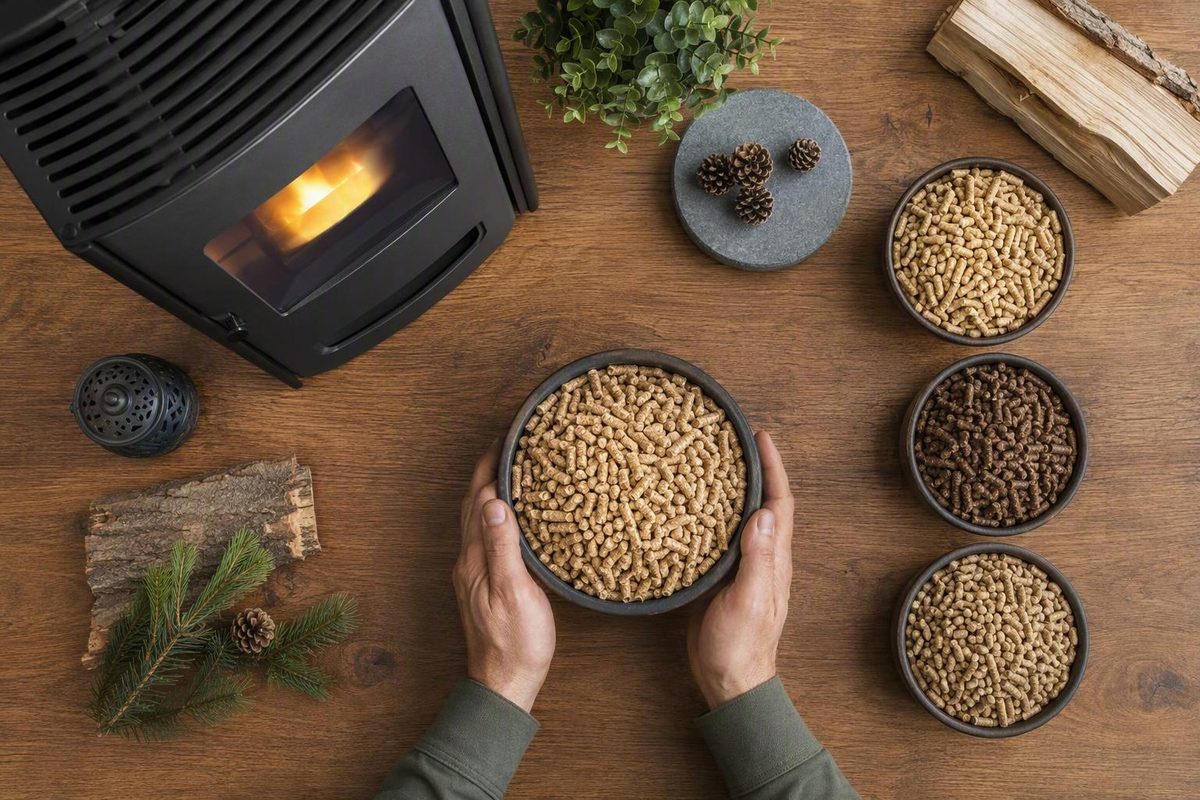
The best pellets for a pellet stove are those that satisfy the exact appliance manual and warranty, carry verifiable quality information, disclose specifications that can be compared on a like-for-like basis, and remain economical after delivery charges. Use wood pellets only in appliances designed for that fuel, follow the appliance manual, and do not commit to a ton until compatibility, delivered cost, access, and dry storage are settled.
This is a documentation and ordering guide, not a universal ranking of pellet types. No single ash, moisture, heating-value, or wood-species claim overrides the requirements for your stove model.
The quick buying checklist
Use this six-step check before buying pellets:
- Consult the stove manual. Find the required or recommended fuel grade, permitted pellet dimensions, and any other fuel restrictions for the exact model.
- Check the current warranty. Look for language connecting warranty recognition to a particular fuel grade or quality program.
- Inspect the actual bag. If the seller claims the fuel is PFI graded, look for the PFI Quality Mark on current packaging rather than relying only on a product description.
- Request missing specifications. Ask for the stated grade, ash, moisture, heating value, durability, fines, and dimensions in writing.
- Calculate delivered cost. Add freight, taxes, lift-gate or limited-access fees, and placement charges to the advertised fuel price.
- Confirm delivery and storage. Make sure the truck can reach the agreed unloading point and that you have a dry, level place for the entire order.
Treat the manual as the controlling document. If the manual requires or recommends a particular grade, buy to that instruction rather than assuming any product marketed as pellet fuel will be suitable.
Price, brand recognition, and feedstock descriptions are secondary filters. A low price likewise does not prove that the pellets will meet the appliance manufacturer’s requirements.
Match the fuel to the stove manual and warranty
Begin with the fuel or operating section of the owner’s manual. Record:
- The required or recommended pellet grade
- Permitted pellet diameter and length
- Any other fuel restrictions
- Warranty language governing fuel quality or grading programs
If the printed manual is missing, obtain the document for the complete model number—not merely a similar stove. Check the manufacturer’s current warranty terms as well as the manual supplied with the appliance.
Keep these concepts separate:
- Producer participation: whether the producer participates in a defined quality program.
- Stated pellet grade: the grade printed on the bag and attributed to that program.
- Feedstock: the material described as hardwood, softwood, blended, or recycled wood.
- Seller claims: wording such as premium, clean burning, low ash, or efficient.
One does not automatically establish another. A retailer calling pellets “premium,” for example, does not prove that the producer participates in the PFI Standards Program.
PFI says many stove manufacturers recommend PFI Graded Fuel and that some manuals require it for warranty recognition. PFI therefore advises owners to use the grade required or recommended by the appliance manufacturer. Because those provisions vary, check the documents for your exact stove rather than relying on a general retailer compatibility statement. The association explains this guidance on its PFI Standards Program page.
Use a simple decision rule: if the seller cannot document that the pellets satisfy the manual and warranty, do not commit to a bulk order. If the manual permits the fuel but stove-specific performance remains uncertain, buy a trial quantity or choose a better-documented product.
How to verify pellet quality claims
According to PFI, its Quality Mark identifies bags from producers qualified under the PFI Standards Program. PFI describes the program as involving regular third-party facility inspections and laboratory testing.
Inspect the current bag or request a clear photograph showing the full packaging. Do not assume words such as premium, quality, or high efficiency are equivalent to a PFI Quality Mark. Confirm that the bag identifies the producer and stated grade clearly enough to compare them with your appliance documents.
PFI maintains a directory of qualified production facilities, which can provide an additional check before a large purchase.
The mark still has limits. It also should not be expanded into promises of a particular ash reduction, efficiency gain, heating-cost saving, or increase in appliance life.
When comparing grades or test values, ask which published standard, test method, units, and reporting basis apply. Do not substitute a retailer’s generic cutoff for the grade and dimensional requirements in your exact stove documentation.
Specifications to request before ordering
Use a comparison sheet that makes missing information visible instead of allowing marketing language to fill the gaps:
| Comparison item | Product A | Product B | What to verify |
|---|---|---|---|
| Stated grade | Program and grade match the manual | ||
| PFI Quality Mark | Visible on current packaging | ||
| Ash | Value, units, basis, and test method | ||
| Moisture | Value, units, basis, and test method | ||
| Heating value | Units and reporting basis | ||
| Durability | Test value and method | ||
| Fines | Measured value or stated limit | ||
| Pellet dimensions | Diameter and length versus the manual | ||
| Feedstock | Hardwood, softwood, blend, or recycled wood | ||
| Bag price | Price and bag weight | ||
| Delivered price | Freight, taxes, and accessorial charges |
Specifications are useful only when they are comparable. Ask the seller or producer to identify those details in writing rather than comparing unexplained numbers.
Feedstock belongs in the comparison, but it is not a quality grade. Without controlled, product-specific results, there is no basis for ranking hardwood, softwood, blended, and recycled-wood pellets as universally superior or inferior.
One seller example shows why disclosure matters. Energy Pellets of America describes its product as made from recycled shipping-pallet wood, but its listing does not disclose a PFI grade or Quality Mark, ash, moisture, heating value, durability, fines, or pellet dimensions. The listing also showed a pallet of fifty 40-pound bags for $290 and a separate 40-pound bag for $6.39. Because the page provides no checked-as-of date, treat those commercial details as an illustrative snapshot and verify current prices before ordering on the seller’s one-ton pellet pallet page.
If specifications are missing, request them in writing. When the manual permits the fuel but its performance in your stove remains uncertain, try several bags before ordering a pallet.
Bag or pallet? Compare the real cost
A pallet may have a lower advertised unit price, but only the complete delivered total determines whether it is cheaper.
In the listing described above, fifty 40-pound bags contain 2,000 pounds of nominal fuel. The listing-specific arithmetic is:
- Pallet unit price: $290 ÷ 50 = $5.80 per 40-pound bag
- Separately listed bag price: $6.39
- Difference: $6.39 − $5.80 = $0.59 per bag
- Difference across 50 bags: $0.59 × 50 = $29.50
These figures are not general market prices.
Use this formula for every offer:
Delivered cost = fuel price + freight + taxes + lift-gate or limited-access fees + placement charge
Then divide the total by the number of bags. For example, $60 in added charges would turn a $290 pallet into a $350 order, or $7 per bag. In that scenario, the delivered pallet unit cost would exceed the listing’s separate $6.39 bag price.
Single bags are useful for testing uncertain fuel, buying for occasional use, or managing limited storage. A pallet can reduce the unit price and the number of shopping trips, but only if the fuel is suitable and added charges do not erase the advertised saving.
Plan for pallet delivery, inspection, and dry storage
Do not treat “delivery” as a promise that the pallet will be moved into a garage, basement, driveway, or indoor storage area.
For the cited product, the seller listed dimensions of 48 by 42 by 51 inches and a shipment weight of 2,100 pounds. The fifty bags contain 2,000 pounds of nominal fuel, leaving an unexplained 100-pound difference between bag contents and listed shipment weight. The same page described lift-gate-equipped trucks and general delivery of one to two business days depending on location. These are product- and seller-specific details, not universal pallet dimensions, weights, placement terms, or delivery times. Confirm them before purchase on the seller’s product listing.
Before ordering, verify:
- Truck access, including clearance and turning space
- Whether delivery is curbside or to another defined point
- The complete delivered price
- Lift-gate, limited-access, and placement charges
- The expected bag count
- The policy for wet, torn, missing, or rejected bags
- A dry, level storage location
- Whether the unloading and storage surfaces can support the shipment
- Current availability and the location-specific delivery window
- Whether someone must be present to accept the order
Before the carrier leaves:
- Count the bags.
- Photograph the wrapped pallet from several sides.
- Record torn wrapping, punctured bags, and broken seals.
- Look for wet, swollen, stained, or misshapen bags.
- Note visible crushing or other shipment damage.
- Follow the seller’s process for documenting damage on the delivery receipt.
Move accepted bags into dry storage promptly. Keep them level, protected from water intrusion, and accessible enough to inspect the supply.
How long will one ton of pellets last?
There is no reliable universal duration.
Estimate duration from your own use:
Estimated days = total pounds purchased ÷ average pounds burned per day
For a better forecast, track several bags during weather similar to the period you are planning for. Do not assume a ton will cover an entire heating season.
Can I use pellets without a PFI Quality Mark?
Possibly, but only if they satisfy the fuel requirements in your exact stove manual and warranty. A missing PFI Quality Mark means the bag does not provide that particular evidence of participation in the PFI program; it does not, by itself, determine compatibility.
Ask for the stated grade and supporting specifications, compare them with the appliance documents, and buy a small trial quantity before considering a pallet. If the manual or warranty requires PFI Graded Fuel, choose appropriately marked fuel from a producer whose status you can verify.
Buy the pellet that meets the stove’s documented requirements, provides verifiable quality information, and remains competitive after every delivery charge. When those facts are missing, request documentation or test a few bags rather than choosing a ton based on wood type, advertised price, or seller promises alone.