
A Realistic Routine for Keeping Your Pellet Stove Clean
Use the exact model manual to set cleaning intervals, confirm fuel requirements and identify when service is required for your stove.
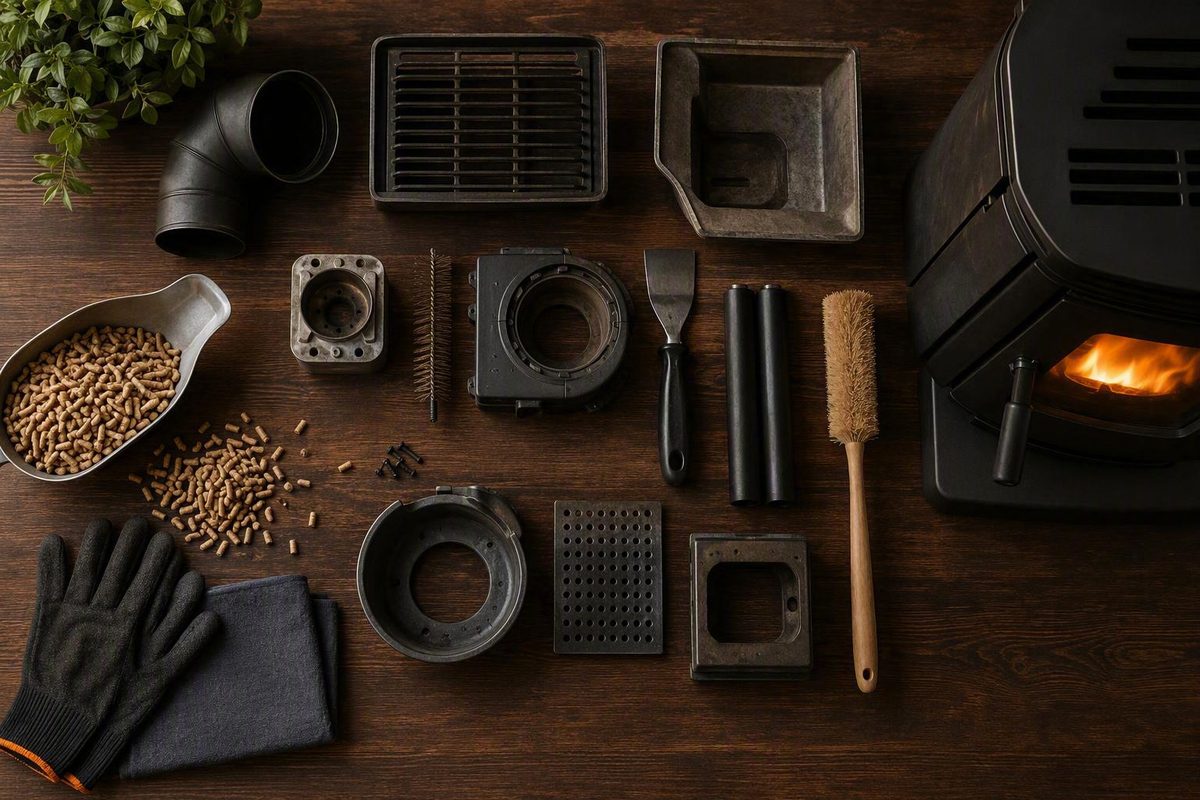
There is no universal pellet stove maintenance calendar. Follow the owner’s manual for your exact model, use only approved fuel, monitor changes in ash and operation, and include recurring professional cleaning in your plan. Another owner’s routine can provide useful context, but it cannot replace the manufacturer’s instructions.
Start with the schedule that applies to your stove
Identify the stove’s manufacturer, complete model number, and any applicable series or revision. Find the corresponding owner’s manual and record its maintenance methods, intervals, fuel requirements, and directions about when service is required.
How often a stove needs attention can vary with its feed design, operating intensity, pellet quality, and manufacturer requirements. A generic daily, weekly, or monthly schedule may therefore call for too much work on one model and too little on another.
Use this article as a planning framework rather than a set of dismantling or cleaning instructions. The manual for the exact appliance should determine what you clean, how you clean it, and which procedures you should leave to a technician.
Pellet stove maintenance schedule at a glance
Translate these general categories into a schedule using the requirements in your manual.
| Task | Evidence-supported timing | What controls the final interval |
|---|---|---|
| Inspect or clean the burn pot | At the frequency stated in the exact model manual | Stove design, operating time, fuel and manufacturer instructions |
| Inspect and remove ash | At the manual’s specified interval or accumulation point | Ash-pan capacity, feed design, fuel quality and workload |
| Complete other owner-authorized cleaning | As directed by the manual | Component design and permitted procedures |
| Professional cleaning | At least once a year; regular cleaning supports efficient and safe operation | Manufacturer requirements, use and technician findings |
| Replace worn or failed parts | When model-specific troubleshooting or service identifies a need | Actual condition and diagnosis |
For context, pellet-stove owner Walt Jensen reports scraping the burn pot every few days, removing ash every week or two, and completing a yearly teardown on his stove. These are personal intervals from one appliance, not manufacturer specifications or a schedule that should automatically be applied to another model (Jensen’s first-person ownership account).
The professional-cleaning benchmark in the table does not replace routine work required by the manual. Likewise, one owner’s yearly teardown does not mean every owner should dismantle a stove annually. The appropriate scope depends on the model and the procedures its manufacturer authorizes.
Adapt the routine to feed design and pellet quality
Feed design affects where ash tends to collect. EPA guidance distinguishes between two common arrangements:
- Top-fed stoves drop pellets into the combustion chamber and are more likely than bottom-fed models to accumulate ash and debris there.
- Bottom-fed stoves introduce pellets from below and push ash toward an ash pan. The pan and accessible combustion areas still need the attention specified in the manual.
Pellet quality can also affect ash production, dust, cleanliness, and heat output.
Fuel compatibility varies by stove. Some models accept only wood pellets, while others permit certain alternative biomass fuels, such as corn or nutshells. Use only the fuel types approved for your appliance; a fuel’s pellet-like shape does not establish compatibility.
A simple observation log can help you compare approved fuels under actual household conditions. Record:
- Pellet brand or product
- Approximate stove use since the previous cleaning
- Ash volume or ash-pan level
- Flame appearance
- Ignition behavior
- Any unusual change in operation
This log is an organizational tool, not a controlled fuel test. Its purpose is to reveal repeatable changes in your stove that may justify consulting the manual, adjusting the maintenance timing within its requirements, or seeking model-appropriate service.
Watch for changes in flame and ignition
Changes in flame or ignition can be prompts to review maintenance, but they are not diagnoses. Jensen reports that, after cleaning was neglected on his stove, he observed a lazy, sooty flame and later a failure to start (reported symptoms from one owner’s stove).
| Symptom | Practical next action |
|---|---|
| Lazy or sooty flame | Review and perform the cleaning steps authorized by the exact model manual |
| Poor ignition or no-start | Check the manual’s cleaning and troubleshooting instructions, then follow its service directions if authorized routine cleaning does not resolve the problem |
Keep any response within the manual’s owner-authorized procedures. If the manual directs you to discontinue operation or obtain service, follow those model-specific instructions rather than attempting invasive repairs.
Plan for professional cleaning and replacement parts
Build the professional-cleaning interval shown in the schedule into the long-term ownership budget, then adjust its timing or scope if the manufacturer requires something different. Ask what a service visit includes for your model rather than assuming that every professional cleaning covers identical work.
EPA’s archived guidance says most pellet stoves require electricity for motorized pellet feeding and hot-air circulation. In Jensen’s stove, electrically powered components include an auger, igniter, and blowers. His account also recommends budgeting for replacement parts over the appliance’s life.
That advice supports maintaining a repair reserve, but it does not establish a predictable service life or standard repair cost for any component. Replacement needs depend on the actual appliance, its condition, and model-specific diagnosis.
Maintain a basic ownership record containing:
- Routine cleaning dates
- Professional service dates and work performed
- Fuel used
- Changes in flame or ignition
- Parts replaced
- Technician recommendations
Such a record can make recurring patterns easier to recognize and provide useful context during service. For warranty-related documentation, consult the actual warranty terms rather than assuming that a personal maintenance log satisfies every requirement.
Use this model-aware maintenance checklist
Save or print this checklist, then complete the blank fields using the owner’s manual for the exact appliance.
Stove manufacturer: ______
Exact model and series: _________
Feed design: ☐ Top-fed ☐ Bottom-fed ☐ Confirm in manual
Approved fuel type or specification: ______
Model-specific intervals
- ☐ Locate the manual for the exact model and series
- ☐ Burn-pot inspection or cleaning: ______
- ☐ Ash removal: ____________
- ☐ Ash-pan inspection: ______
- ☐ Other owner-authorized cleaning: ______
- ☐ Manufacturer-required professional service: _______
- ☐ Other model-specific maintenance: _____
Routine monitoring
- ☐ Confirm that the current fuel is approved for the appliance
- ☐ Observe ash accumulation
- ☐ Note changes in flame appearance
- ☐ Note slow, inconsistent, or failed ignition
- ☐ Compare results when changing between approved pellet products
- ☐ Consult the manual when operating behavior changes
Long-term service planning
- ☐ Schedule professional cleaning to the benchmark in the maintenance table or the manufacturer’s stricter requirement
- ☐ Record routine and professional cleaning dates
- ☐ Record the fuel used during each operating period
- ☐ Record symptoms and the conditions under which they occurred
- ☐ Record replacement parts and completed repairs
- ☐ Follow the manual whenever it directs the owner to obtain service
The EPA Burn Wise page cited here is a historic record; EPA says its program content has not been updated since October 30, 2025. Whenever this general framework or another owner’s routine differs from the instructions for your stove, follow the exact model manual.