
Use pellet fuel reviews to shortlist brands—not to buy a ton untested
Learn which pellet fuel reviews deserve weight, how to compare heat and cleaning claims, and what to record before buying a winter supply.
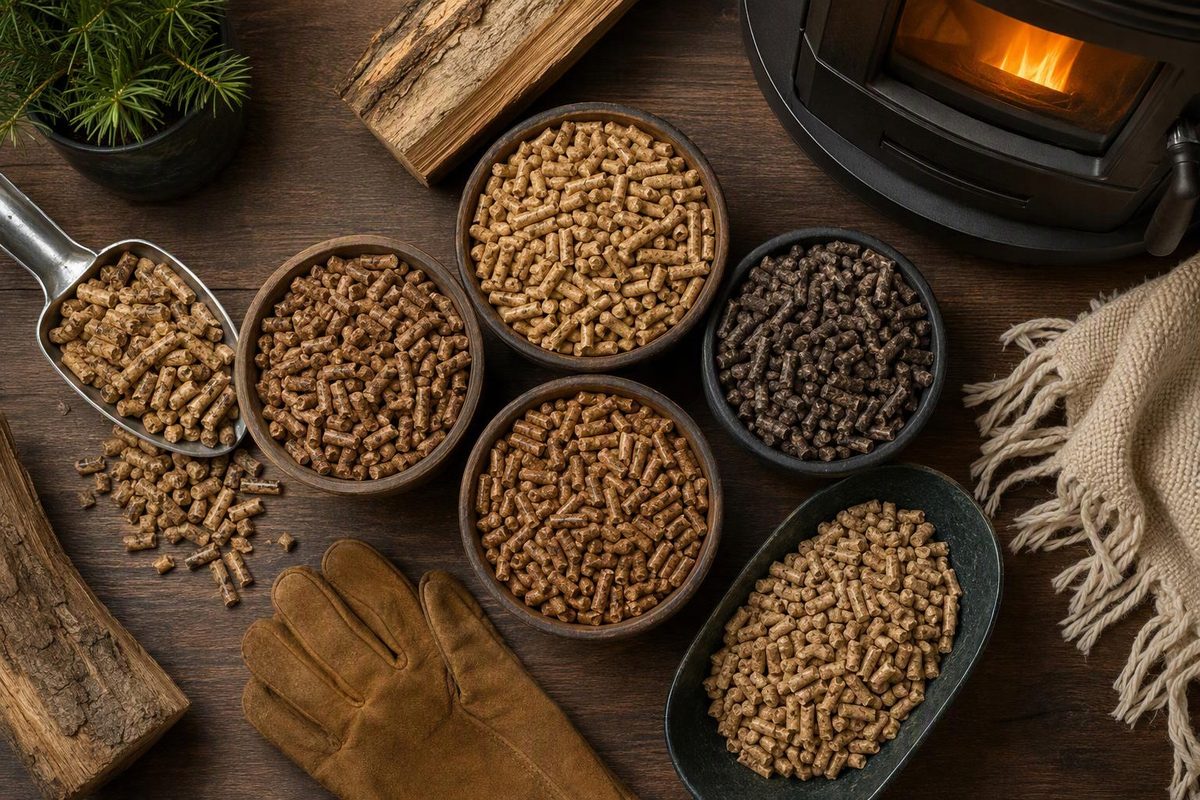
Give the most weight to owner reviews from recent buyers using your stove model and identifying the exact fuel—not simply awarding a brand five stars. Use reviews to choose a few locally available candidates, then burn a small quantity before committing to a winter supply.
For a household purchase, the priorities are straightforward: approved fuel, dependable feeding, enough heat, manageable cleaning and a sensible delivered price. A glowing review that leaves out those details is a weak reason to buy a pallet.
What a brand ranking can—and cannot—tell you
In one Hearth.com six-brand comparison, a Harman Accentra 52i owner chose Energex as the best value and Hamer’s Hot Ones as the preferred option if price did not matter. The owner explicitly described the ranking as specific to their stove, region and experience.
That is useful community experience, not an independent laboratory result or a current national buying recommendation. It suggests candidates to investigate; it does not establish that either brand will outperform everything sold near you. Nor should the thread’s older prices become your winter budget.
Look for reviews that disclose:
- Exact stove model: a room-stove report is more relevant to a room-stove buyer than a pellet-boiler report.
- Exact bag and purchase details: product line, producer information, retailer, purchase date and any lot code.
- Quantity burned: several bags offer a better picture of repeated operation than one ignition.
- Operating conditions: heat setting, thermostat use, weather and whether the stove started clean.
- Specific observations: feeding interruptions, hard deposits, cleaning frequency and whether the room maintained its temperature.
The Harman Absolute43-C manual, revised September 2025, warns that pellet quality can vary between manufacturers and even between bags. That is a good reason to prefer recent, identifiable purchases over a brand’s accumulated reputation.
Give different review claims different weight
| Review claim | What makes it useful | What it does not prove |
|---|---|---|
| “Very little ash” | Fuel quantity burned, cleaning interval and description of deposits | That a small-looking pile has a low laboratory ash percentage |
| “Burns hotter” | Comparable settings and conditions; a clearly stated measurement method | Higher fuel heat content from flame appearance alone |
| “A bag lasts longer” | Bag weight, operating mode, room temperature and weather | Lower heating cost if the room received less heat |
| “Feeds reliably” | Multiple bags without interruptions in the same stove model | That every feeding problem is caused by fuel |
| “Best value” | A dated, local price including delivery and fees | That it remains the cheapest practical choice elsewhere |
Do not dismiss cleaning complaints, but do not automatically blame the pellets. The Absolute43-C manual also identifies dirty burn pots, heat exchangers and exhaust blowers among causes of poor flame behavior, and notes that low burn settings affect glass cleaning. Review conditions matter. See the manufacturer’s operating guidance.
Check the bag before trusting the rating
Your stove manual is the first filter. For example, the Absolute43-C is approved for wood pellets only; its fuel specifications call for premium-grade pellets and recommend PFI-certified fuel. Your own model’s requirements—not a reviewer’s successful experiment—should determine what you try. Harman’s fuel specifications also connect higher ash content with more frequent maintenance.
For U.S. bagged heating pellets, the Pellet Fuels Institute’s Quality Mark identifies fuel from qualified production facilities subject to third-party inspection and laboratory testing. That provides quality-control evidence separate from owner ratings; it is not a promise of the best performance in every stove.
For the label details, see what “Premium” actually guarantees.
Run a small comparison before buying the season’s supply
Buy a few bags of each compatible candidate. Keep them dry: moisture can make pellets swell and deteriorate, according to Forge & Flame’s fuel guidance.
Use this simple purchase log:
- Photograph the bag label and lot code, if present.
- Record bag weight and price, plus the quoted delivered bulk price.
- Begin each comparison with the same manual-required cleaning completed.
- Keep the operating mode and temperature target consistent; note weather differences.
- Record pounds burned, time covered, room comfort, feeding interruptions and cleaning work.
This is a practical compatibility check, not a controlled measurement of heat content or stove efficiency. Do not postpone required cleaning to extend a test. Follow your model’s shutdown and cooling instructions before inspection or maintenance. A few bags can reveal an immediate mismatch; they cannot guarantee a trouble-free season.
Finally, put the price premium in household terms. Hypothetically, paying $30 more per U.S. ton costs $90 extra over a three-ton season, assuming equal consumption and all delivery charges included. That may be worthwhile for demonstrably easier cleaning or more dependable operation. If your trial shows no meaningful benefit, the cheaper approved fuel is the stronger purchase. Use delivered-cost comparison rather than an old reviewer’s bag price to make that decision.