
Pellet Fuel Storage: Keep Bags Dry and Store Them Safely
Protect heating pellets from moisture, check ventilation, spot damaged bags and keep fuel clear of your stove.
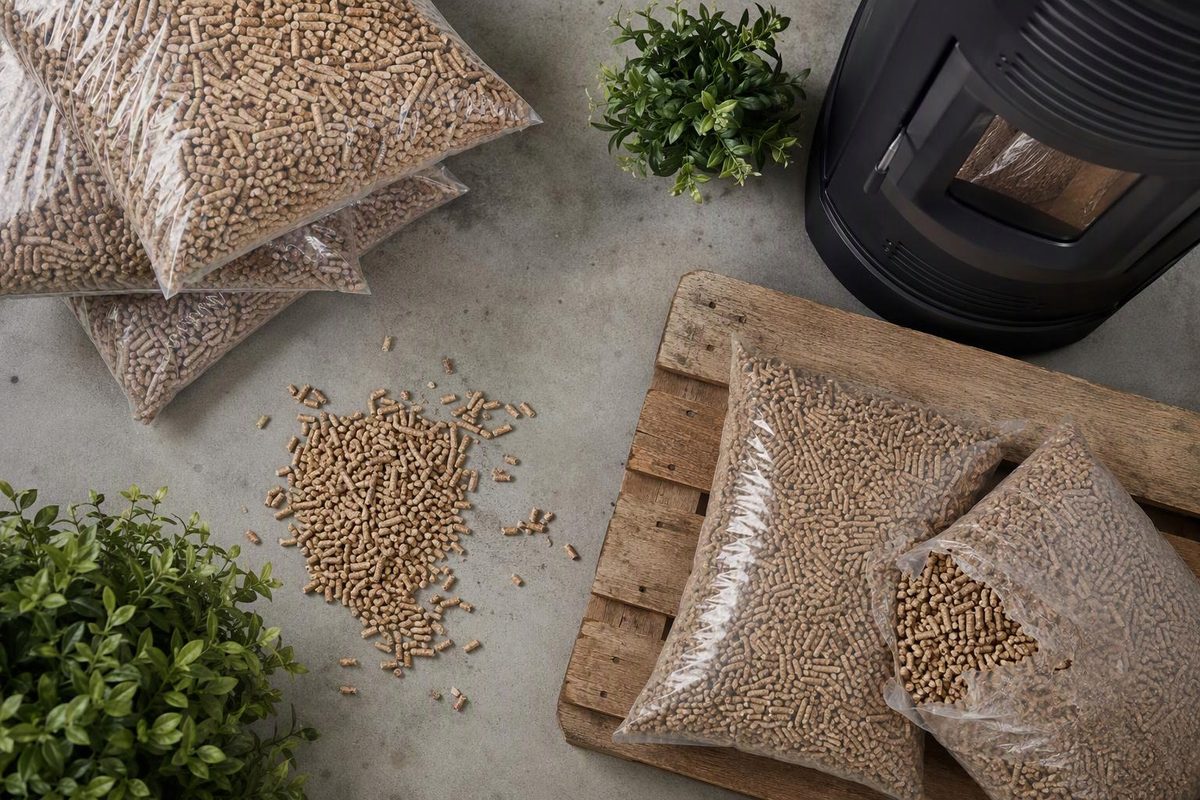
Store heating pellets dry, off the ground, protected from weather and outside your stove’s required clearances. Keep unopened fuel in its original bags—but don’t mistake those bags for waterproof packaging or assume an enclosed storage room needs no ventilation.
This guide focuses on protecting bagged fuel. For order size, pallet dimensions and floor-loading calculations, use our pellet storage-space guide. Bulk storage feeding a pellet boiler is a different system, with additional safety requirements.
Choose a dry location—and check ventilation
A weatherproof outbuilding separates the supply from living spaces, but it still needs ventilation. New York’s Department of Health recommends a separate structure ventilated to the outdoors to minimize CO exposure. Its pellet-storage leaflet identifies stored bulk pellets as a CO source and also calls for hazard signs and delivery openings that prevent access by children. This is health guidance, not a universal storage-code requirement.
Bagged fuel can also release carbon monoxide without burning. Researchers measured emissions from fresh pellets in plastic bags inside sealed laboratory drums and elevated CO concentrations in a large pellet warehouse. Those results do not establish the concentration in a household garage or a universally safe number of bags. The original study recommends cool, dry storage, and active ventilation with CO monitoring for buildings storing large quantities.
Before putting a seasonal supply in an enclosed shed, attached garage or basement, have a qualified professional assess ventilation and CO monitoring. Do not assume a vent grille alone is sufficient. A dehumidifier addresses dampness; it does not replace ventilation. Install and maintain home CO alarms according to their instructions and local requirements, as the New York health guidance advises.
Also check:
- Water: roof leaks, flooding, puddles and sprinkler spray.
- Access: a clear route from delivery to storage, then from storage to the stove.
- Weight: the capacity of the floor or shelving—not just whether the bags fit.
- Handling: bags should be reachable without climbing onto the stack.
Protect outdoor pallets beyond the factory wrap
Outdoor storage needs more than intact-looking bag plastic. Pellet bags can be perforated for packing, as described in the bagged-pellet study. Do not treat them as individual rainproof containers.
For an outdoor pallet:
- Choose a high, well-drained spot, preferably under a roof or shelter.
- Keep bags elevated on a sound pallet, away from soil and standing water.
- Inspect the outer shroud for tears and punctures; repair damage promptly.
- Add a securely fastened weatherproof tarp.
- Allow air circulation at the base rather than sealing the tarp tightly to the ground.
- Re-cover the stack after taking bags and inspect it after storms.
These practices follow WoodPellets.com’s storage and handling guidance. The supplier specifically warns that a tarp sealed to the ground can trap condensation.
Before accepting delivery, photograph torn packaging and visibly damaged bags, and ask the supplier how it handles damage claims. Keep the remaining weather protection in place as you work through the pallet.
Keep daily fuel clear of the stove
A refill bag or small covered bin can reduce trips to the main supply, but convenience does not override combustible clearances. Check the exact appliance manual rather than using a generic distance.
For example, Harman’s September 2025 Absolute43-C owner’s manual says fuel must stay outside installation clearances and outside the space needed for cleaning and ash removal. It also directs owners to leave pellets in their original sealed bags until use. See the manual’s fuel-storage section.
Reseal a partly used bag promptly, or use a clean, dry, covered container for a manageable refill supply. Keep its label so you retain the fuel identity. Our pellet storage-bin guide covers capacity and lifting-weight choices.
Inspect fuel before it reaches the hopper
Set aside pellets that are visibly swollen, soft or crumbling, especially after a known leak. Damp pellets can revert to sawdust and stop flowing properly through the feed system, according to the Harman manual. Drying a water-damaged bag does not reliably restore usable pellets; WoodPellets.com advises against using wet, swollen fuel.
Keep damaged bags separate rather than mixing them into good fuel. Use older, sound stock first and mark delivery dates so leftovers remain easy to identify. At seasonal shutdown, empty the hopper using your model’s shutdown and cleaning instructions; the supplier warns against leaving pellets exposed to summer humidity in the hopper.
Bulk boiler stores need a different safety plan
Do not turn a spare room into a loose-pellet bunker using bag-storage advice. Have a competent installer design and commission the store, including ventilation, restricted access and safe servicing procedures.
The UK Health and Safety Executive warns against entering pellet storage rooms, tanks or hoppers—or putting your head inside a bulk hopper—because CO and oxygen depletion can create a lethal atmosphere. Entry requires trained, competent personnel and confined-space controls, including ventilation and checks of CO and oxygen levels. The HSE safety alert concerns bulk and boiler systems, not routine filling of a room stove.
If you cannot protect and safely access a full-season order, buy a smaller quantity and include repeat delivery costs in the comparison. A lower price per ton is not a bargain if part of the supply becomes unusable.