
8 Inch Stove Pipe: Identify the System Before You Buy
Distinguish 8-inch wood-stove connectors from pellet vent, check clearances, and learn what to verify before reusing an existing chimney.
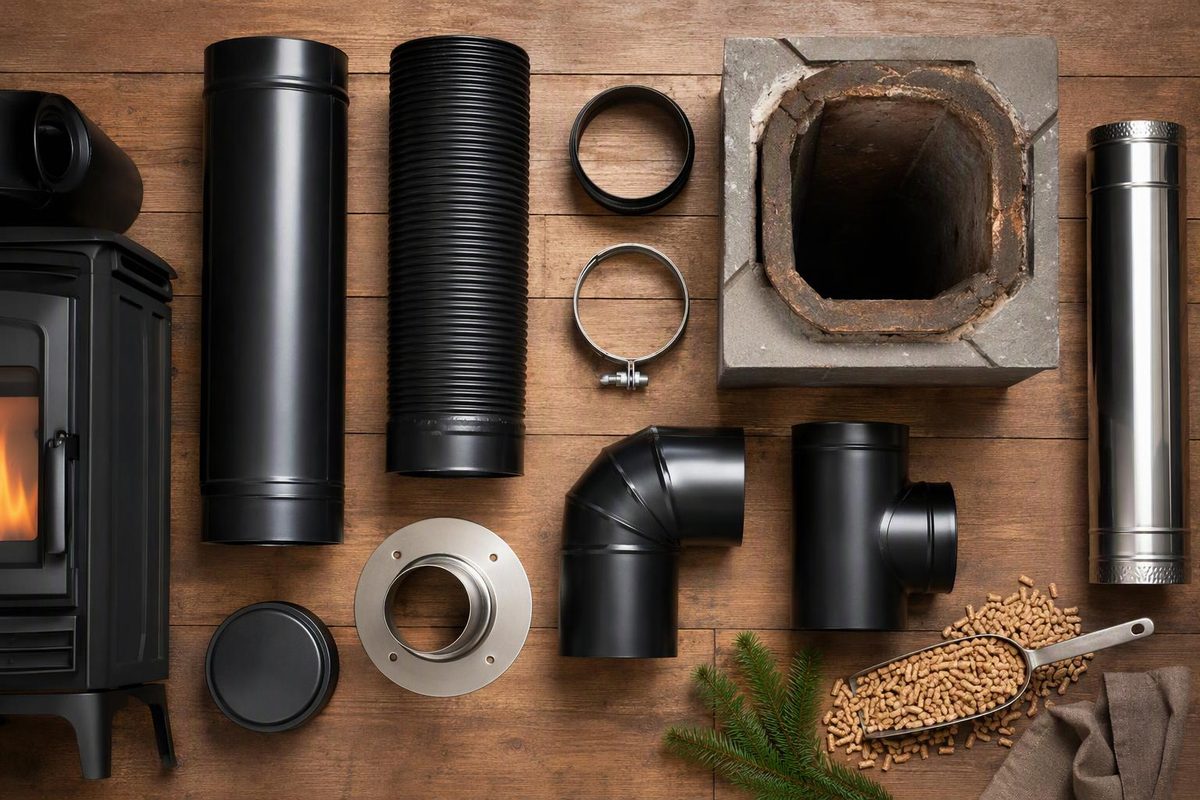
Do not buy 8-inch stove pipe for a pellet stove simply because the old wood stove used it. First determine whether you need an interior wood-stove connector, a factory-built chimney component, or an approved connection between pellet vent and an existing chimney.
Those are different products. DuraVent’s DuraBlack and DVL lines include 8-inch interior wood-stove connectors; its PelletVent Pro system comes in 3- and 4-inch diameters. The stove manual—not the size of the pipe already in the house—determines the permitted venting arrangement, alongside the vent-system instructions and local requirements. DuraBlack specifications, DVL specifications, and PelletVent Pro specifications describe these separate applications.
What kind of 8-inch pipe are you looking at?
For a homeowner replacing a wood stove with pellet heat, the important distinction is connector versus chimney:
- Single-wall stovepipe connects the appliance to the chimney inside the room. For example, DuraBlack’s 8-inch single-wall black pipe requires 18 inches of clearance to combustibles.
- Double-wall connector pipe can provide closer clearances, but it is still a connector. DuraVent specifies 6 inches to walls and 8 inches to ceilings for DVL.
- Factory-built chimney pipe is a separate system with its own supports, penetration components and clearances. DuraPlus, for example, generally requires a 2-inch clearance to combustibles, with specific exceptions inside its listed support and shield components.
These are product-specific examples, not universal clearance rules. Apply the requirements for both the exact appliance and the exact pipe system. Sources: DuraBlack catalog, DVL installation instructions, and DuraPlus installation instructions.
“Double-wall” does not automatically mean a pipe can pass through the building. DVL’s instructions expressly prohibit enclosing its connector pipe or passing it through walls, ceilings, attics or closets. In its through-wall or through-ceiling arrangements, DVL transitions to the appropriate chimney system; the connector does not continue through the opening. DVL installation instructions
Also check what “8 inch” measures. An 8-inch DVL straight section has an 8-inch inner diameter and a 9-inch outer diameter. DuraPlus instructions calculate outside diameter by adding 4 inches to inside diameter. Measuring only the outside can therefore send you shopping for the wrong size. DVL dimensions and DuraPlus sizing instructions
Can a pellet stove use an existing 8-inch chimney?
Possibly—but an available adapter is not approval for your installation.
DuraVent lists PelletVent Pro chimney adapters in 3-to-8-inch and 4-to-8-inch sizes. Its catalog describes transitions to existing DuraPlus, DuraPlus HTC or DuraTech chimneys, and says connections to DuraTech and DuraPlus also require a DVL/DuraBlack chimney adapter. That is a documented system connection, not permission to use a generic reducer or mix whatever parts fit. PelletVent Pro catalog, chimney adapters
Before reusing the chimney, have a qualified installer verify its manufacturer, product line, condition and compatibility with the stove’s approved route. The Outfitter-I manual, for example, requires inspection of an existing chimney and specifies condition and listing requirements. An 8-inch masonry flue is not the same connection as an 8-inch factory-built metal chimney. Depending on the appliance and local requirements, the proposed route may need an approved liner instead. Outfitter-I installation manual, chimney inspection Our pellet stove chimney liner guide explains that decision.
Ordinary black stovepipe is not an interchangeable substitute for pellet vent. PelletVent Pro’s instructions prohibit single-wall pipe on freestanding pellet stoves. Separately, some appliance manuals document special connector arrangements: the Quadra-Fire Outfitter-I manual permits specified top-vent adapters with 24-gauge single-wall connectors in residential installations. That does not override PelletVent Pro’s restrictions or establish approval for another stove. Have the installer confirm that the proposed arrangement satisfies all applicable appliance and vent-system instructions; if they conflict, obtain manufacturer clarification before buying. PelletVent Pro instructions and Outfitter-I installation manual, section 4F
What to confirm before ordering
Give the installer or parts supplier:
- The stove’s model and matching installation manual. Identify its outlet size, approved vent types and sizing method.
- The existing chimney’s label and photographs. Do not identify the system by color or diameter alone.
- A route sketch with lengths and bends, plus the site altitude. Pellet vent sizing can depend on equivalent pipe length and altitude; the Outfitter-I manual uses both to choose between 3- and 4-inch vent. Outfitter-I sizing instructions
- A complete parts list. Include the appliance adapter, any chimney transition, supports, penetration components, termination and cleaning access—not just straight pipe.
Contact local building or fire officials about permits, restrictions and inspection requirements before installation, as the PelletVent Pro instructions direct. Once the route and system are settled, use our pellet stove vent kit checklist to audit the proposed parts before buying.