
How to Get a Clear Stove Window Without Damaging It
Compares Stove Bright, RUTLAND 84 and a damp cloth, with a cool-glass method plus cautions for seals, coatings and stubborn buildup.
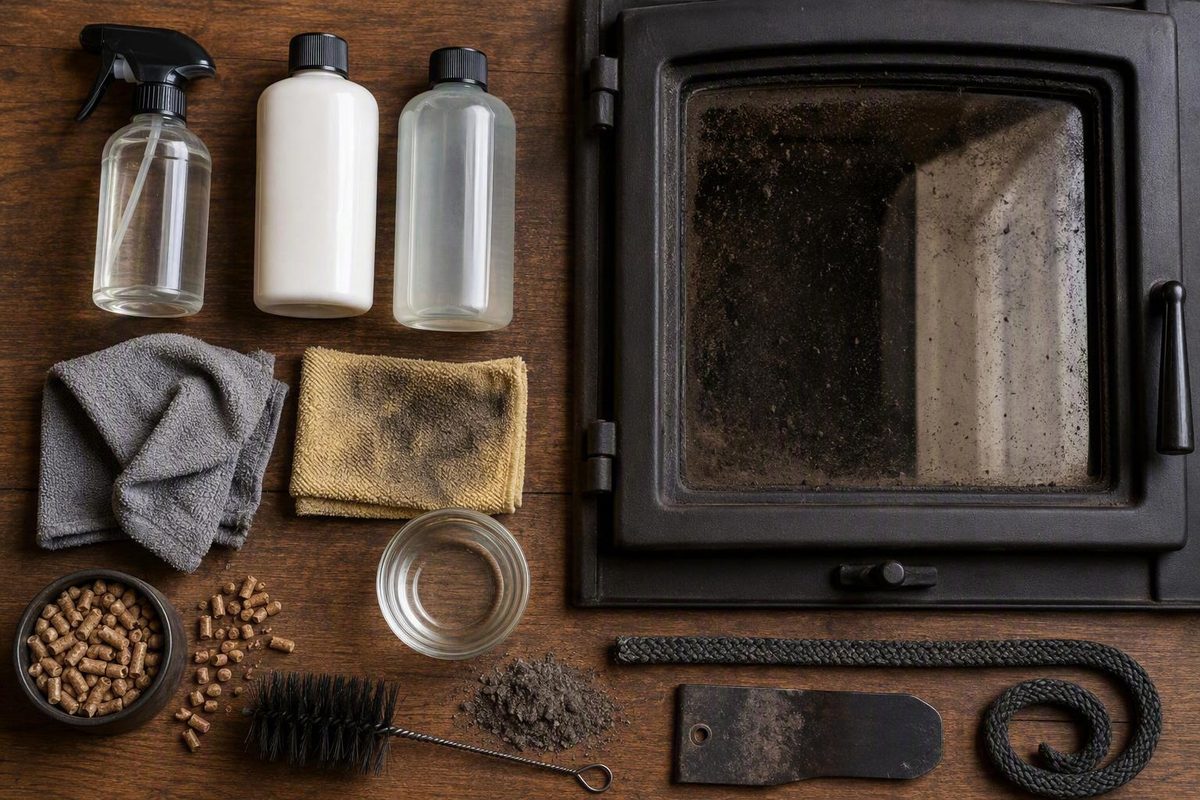
Check your stove manual first, then choose a purpose-made glass cleaner explicitly labeled for pellet stoves or hearth appliances. Clean only when the appliance and glass are completely cool, follow the product directions exactly, remove all residue, and inspect the door before relighting.
The short answer: what cleaner should you use?
Start with the pellet stove’s manual. It may restrict chemicals, abrasives, moisture near seals, or contact with coated and painted surfaces. If the manual does not specify a product, favor a purpose-made stove-glass cleaner whose labeling clearly covers pellet appliances.
Two commercially available options have relevant labeling:
- Stove Bright Glass Cleaner: The manufacturer lists pellet-stove windows as an intended use and describes a spray, wait, and wipe process. Its claims about removing creosote and cleaning without streaks are manufacturer claims, not independent comparative findings. See the manufacturer’s Stove Bright product description.
- RUTLAND 84 Stove, Grill & Hearth Conditioning Glass Cleaner: RUTLAND markets this ammonia-free product for stove and fireplace-insert glass. Its directions call for cold glass, a small-area compatibility test, sparing application, and polishing before the cleaner dries. The manufacturer also provides a safety data sheet and displays a California Proposition 65 warning concerning exposure to crystalline silica. Its non-scratching and protective-layer statements remain manufacturer claims. Review RUTLAND 84’s directions and safety information.
RUTLAND’s own product page does not explicitly name pellet stoves, although Northeast Pellet Stoves separately recommends RUTLAND Glass Cleaner for pellet inserts and stoves. That is a service company’s preference, not proof of universal compatibility or superior performance.
Neither product should be treated as better for every stove.
Quick selection table: Stove Bright, RUTLAND, or no chemical cleaner
| Option | Labeling and documented use | Application | Cautions and evidence limits |
|---|---|---|---|
| Stove Bright | Manufacturer explicitly lists pellet-stove windows | Spray, wait, and wipe; seller directions specify a cool stove and a final wet wipe to remove residue | Avoid unapproved surrounding components. Creosote removal, streak-free cleaning, and longer-lasting cleanliness are commercial claims. |
| RUTLAND 84 | Marketed for stove and fireplace-insert glass; separately recommended for pellet stoves by a service company | Shake, test a small area, apply sparingly to cold glass with damp paper, remove excess, and polish before drying | Do not use on plastic. Confirm compatibility with the pellet-stove model. “Non-scratching” and protective-layer statements are manufacturer claims. |
| Damp non-abrasive cloth | Avoids a commercial cleaning chemical, but the stove manual still controls | Gently wipe loose soot from completely cool glass, then dry | May not remove baked-on deposits. Keep excess moisture away from components excluded by the manual. |
Price, stock, review scores, warranties, and rankings are not useful selection criteria here. They change over time and do not demonstrate cleaning performance.
Safe cleaning procedure: cool, test, clean, remove, inspect
Use this sequence only when it agrees with the stove manual and cleaner label.
-
Turn the stove off and let it cool completely. Glass and surrounding surfaces remain hot during operation and cooldown. The PelPro PP130 manual warns that hot glass causes burns, says not to touch it until cooled, and directs owners to keep children away. Consult the PelPro manual’s glass-safety warning.
-
Read both sets of instructions. Check the stove manual for approved cleaners, coating restrictions, gasket precautions, and door-handling requirements. Then read the cleaner label and available safety information. Model-specific instructions override a general procedure.
-
Protect the surrounding area. Place paper or a washable cloth below the open door to catch soot. Remove debris gently rather than brushing it into the room.
-
Wipe away loose soot. Use a clean, dry or slightly damp non-abrasive cloth. Removing loose particles first reduces the chance of dragging them across the pane during further cleaning.
-
Test when directed. RUTLAND 84 requires a small-area compatibility test. A product’s silence about testing does not prove that it is suitable for every coating, trim piece, gasket, or painted finish.
-
Apply sparingly and follow the stated timing. Put the cleaner on the glass or cloth as directed. Do not soak the window edges or invent a longer dwell time for stubborn deposits.
-
Remove the cleaner exactly as directed. RUTLAND 84 must be removed and polished before it dries. Stove Bright seller directions say to clean cool glass and then wipe it again with a wet rag or paper towel to remove residue. See the Stove Bright application instructions.
-
Dry and inspect. Buff the pane dry and check for cleaner, loosened deposits, lint, cracked glass, displaced seals, or loose retaining parts. Relight only after the glass is dry, residue-free, and assembled as required by the stove manual.
Unless both sets of instructions permit contact, keep the cleaner away from plastics, paint, coatings, rope seals, gaskets, controls, and other surrounding components.
Decision guide for light soot, baked-on buildup, and disputed methods
For light, loose soot: Wait until the stove is completely cool. Wipe gently with a damp, non-abrasive cloth, then dry the pane. If the deposit releases easily, there is no need to move to a chemical or abrasive method.
For stubborn, baked-on residue: Confirm that a purpose-made pellet- or stove-glass cleaner is compatible with the model. Follow the specified application time and residue-removal instructions. Any second application should also remain within the product label and stove manual rather than relying on added pressure or a longer soak.
For deposits that return rapidly: Treat the glass as a possible maintenance or operating clue rather than reaching for a stronger cleaner. Check the pellet-stove manual’s instructions for the burn pot, combustion-air paths, door seals, venting, fuel condition, operating settings, and scheduled maintenance. These are areas to review, not a diagnosis from the soot pattern alone.
The ash-and-water method is disputed. Some heater-care guides recommend using damp paper and fine, cold ash on cool glass. Wood- and multi-fuel-stove guidance also warns that grit dragged across the pane can scratch it. Because that advice is not universally applicable to pellet appliances, use ash only when the manufacturer of the exact stove permits it, and stop if it feels gritty.
Do not use steel wool, razor blades, oven cleaner, scouring pads, or cleaning powders unless the stove manufacturer expressly approves the specific tool or chemical for that model. A method suggested for a wood or multi-fuel stove does not automatically transfer to a pellet stove.
Published advice also conflicts on Windex and ammonia-based household cleaners. General heater-care guides warn against household glass cleaners, while one pellet-stove repair technician recommends Windex based on personal experience. Without pellet-specific comparative testing that resolves the disagreement, the appliance manual remains the controlling source.
When black glass is more than a cleaning problem
Glass that quickly turns black again may justify checking stove operation and maintenance rather than repeatedly using cleaner. Review the burn pot, combustion-air passages, pellet condition, door sealing, venting, operating settings, and any maintenance that is due.
Do not infer one specific fault from the deposit’s appearance. Similar soot can occur under different operating conditions, and a clear window does not prove that the stove is safe or efficient.
Glass cleaning and whole-stove maintenance also follow different schedules. A window may need wiping more often than internal passages or venting. The Harman P43 manual calls for periodic cleaning during the heating season, end-of-season cleaning, and annual professional servicing of the stove and complete venting system. It also requires the viewing and ash-removal doors to remain tightly closed during operation. Check the Harman P43 maintenance requirements.
Pellet Finder’s experience-based ownership guidance likewise describes burn-pot scraping, ash removal, and an annual teardown as recurring work. That practical experience does not replace the maintenance schedule for a specific model.
If rapid blackening persists after ordinary glass cleaning and required stove maintenance, consult the troubleshooting section of the manual or arrange qualified service.
Stop and seek service when you find damage or abnormal operation
A cleaner cannot repair cracked glass, damaged seals, failed clips, or loose retaining components. Do not relight the stove if the viewing pane is cracked or the door assembly appears damaged or displaced.
Smoke entering the room, a persistent strong odor, difficult ignition, or continuing poor performance are also reasons to stop and seek qualified inspection. These warning signs appear in broader guidance for wood and multi-fuel stoves, so apply them conservatively and follow the pellet stove’s own manual. Review the cited stop-use and service warning signs.
Keep viewing and ash-removal doors tightly closed during operation. Never substitute generic window glass. The PelPro PP130 and Harman P43 manuals each specify 5 mm ceramic replacement glass for those particular models; that specification is not universal and does not establish cleaner compatibility. Use only the replacement glass required for the exact stove model. The PP130 manual specifies its required replacement glass.
Keep children away from the appliance during operation and cooldown. The viewing glass and nearby surfaces can remain hot after the visible fire has gone out.
Can I use fireplace-glass cleaner on a pellet stove?
Only when the product labeling and pellet-stove manual allow it. Stove Bright explicitly includes pellet-stove windows. RUTLAND 84 is labeled for stove and fireplace-insert glass and is separately recommended for pellet stoves by a service company, but its product page does not specifically name pellet appliances. “Fireplace glass” on the package is not enough by itself.
How often should pellet-stove glass be cleaned?
Clean it as needed and according to the model manual. Frequency varies with stove design, use, pellet condition, operating settings, and maintenance status. Experience-based recommendations can be much more frequent than manufacturer maintenance schedules, but they should not be treated as universal requirements. Window cleaning also does not replace scheduled cleaning of the stove or venting.
Must I remove all cleaner before relighting the stove?
Yes. Follow the cleaner’s removal instructions, dry the glass, and make sure no cleaner or loosened soot remains on the pane or surrounding components. RUTLAND 84 must be polished off before it dries, while Stove Bright seller directions require a final wet wipe.
Is ash safe for cleaning pellet-stove glass?
Not universally. Some guides recommend fine, cold ash, but grit or hard particles dragged across the pane may scratch it. Advice based on wood ash may not apply to pellet ash or coated glass. Use ash only with explicit permission from the stove manufacturer.
The practical rule is simple: cool the stove completely, check the model manual, choose a clearly labeled pellet- or stove-glass cleaner, follow its directions, remove all residue, and inspect the door before relighting. If blackening returns quickly or damage is visible, stop escalating the cleaner and investigate maintenance or operation instead.