
Is This High-Output Pellet Stove a Good Fit for Your Home?
Its advertised 3,900-sq.-ft. maximum does not guarantee whole-house comfort. See how heat loss, layout and airflow shape the decision.
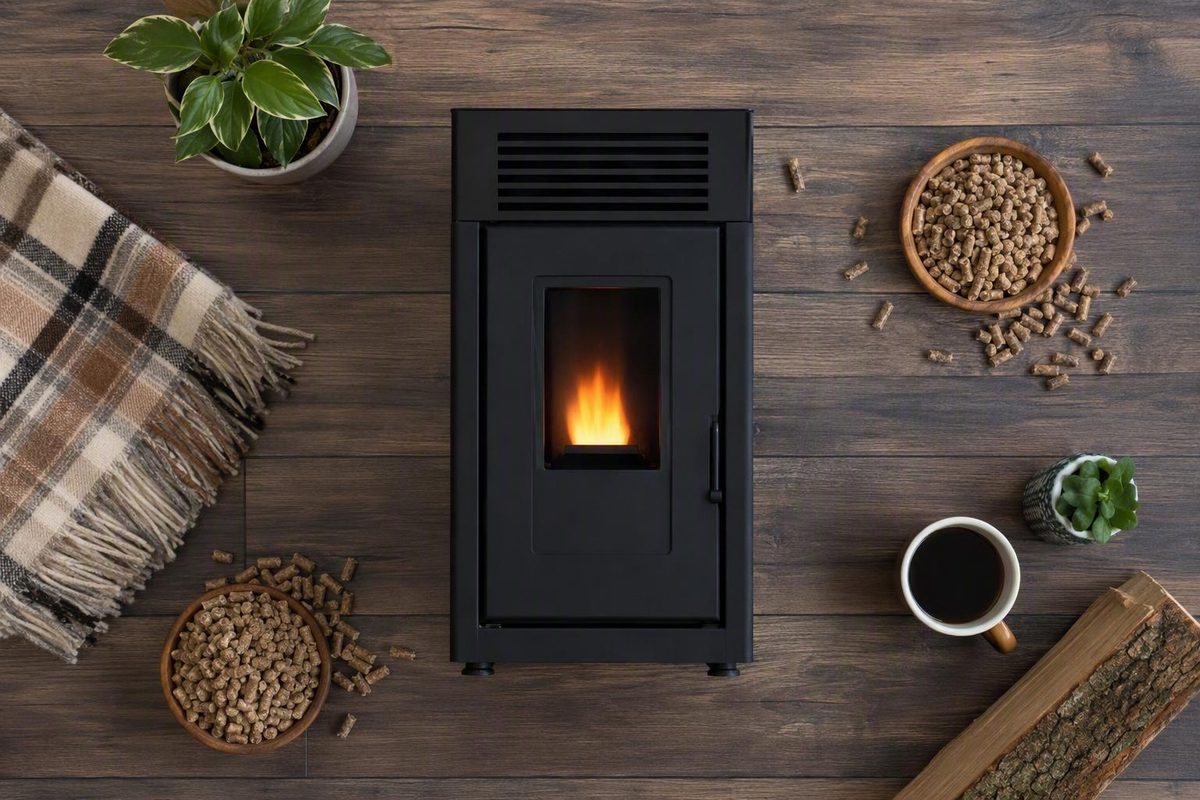
Is this high-output pellet stove a good fit for your home?
Harman P68 at a glance: the short buyer’s assessment
The Harman P68 is a freestanding pellet stove intended for substantial space-heating demand. Several retailers position it as the largest and most powerful model in Harman’s P-Series. That is seller positioning, not an independently verified comparison with every pellet stove on the market.
Retail pages checked on August 20, 2026 repeatedly published these headline figures:
- Heat input: 20,200–67,600 BTU per hour
- Stated heating area: 1,500–3,900 square feet
- Hopper capacity: 76 pounds
- Efficiency: 85% LHV and 79% HHV
- Emissions: 1.4 grams per hour
- Base or starting price: $5,789
Forge & Flame lists that input range, heating range, hopper capacity, efficiency, emissions and product-only starting price on its Harman P68 product page. Prices, availability and dealer packages can change after the review date.
The short assessment is conditional: the P68 deserves consideration when a home needs a high-input pellet stove with a large hopper and thermostat-based operation. But neither the maximum input rating nor the advertised square-foot figure proves that it will heat a particular house evenly, reach closed bedrooms or replace central heat.
A high-capacity appliance can make its immediate room very warm while leaving distant areas uncomfortable.
The commonly displayed $5,789 figure also requires qualification. The reviewed listings describe it as a base, starting, MSRP or product price—not a universal current price or a complete installed cost. Forge & Flame expressly excludes delivery, installation, venting, finishing materials, accessories and applicable taxes from its starting figure.
How this assessment handles the evidence
This article was researched from retailer pages, a Harman-uploaded general P-Series operating video, third-party service resources and owner discussions. The stove was not independently tested, and the evidence pack does not contain a current model-specific Harman specification sheet, certification record, complete warranty or verified installation requirements.
Claims therefore fall into five categories:
- Retailer-listed specification: A seller publishes the number, but it is not independently verified here as a current official Harman rating.
- General Harman P-Series guidance: Manufacturer-produced guidance applies to the broader product family and may not resolve differences among individual versions.
- Owner anecdote: A forum participant reports conditions in one home. The account illustrates a possible outcome but cannot predict another installation.
- Mathematical estimate: A result is calculated from retailer-listed inputs. It is not a measured performance result.
- Unresolved model-specific question: The answer must come from documentation matched to the appliance label—especially where retail pages alternate between P68 and P68-C.
That distinction matters because agreement among retailers may reflect shared product copy rather than separate testing. The buying question is not simply whether the stove can produce substantial heat. It is whether the exact appliance being quoted can satisfy the building’s calculated heat loss and distribute heat where occupants need it.
Published specifications, translated into buying terms
The following figures recur in retailer literature, but not every value appears on every page. Treat all of them as retailer-published and provisional until the dealer supplies documentation matched to the model designation and serial range.
| Specification | Retailer-listed value | What it means for a buyer |
|---|---|---|
| Heat input | 20,200–67,600 BTU/h | Published fuel-energy input range, not verified heat delivered to the rooms |
| Maximum feed rate | Up to 7.8 lb/h | P68-C retailer figure useful for a bounded runtime calculation |
| Hopper capacity | 76 lb | Nominal listed fuel capacity |
| Efficiency | 85% LHV | Efficiency expressed on a lower-heating-value basis |
| Efficiency | 79% HHV | Efficiency expressed on a higher-heating-value basis |
| Emissions | 1.4 g/h | Retailer-published particulate-emissions figure |
| Heating coverage | 1,500–3,900 sq. ft. | Advertised range or conditional maximum, not a whole-house guarantee |
| Width | About 23.5 in. | Provisional body width for access planning |
| Height | About 37.4–37.5 in. | Retail listings differ slightly through rounding |
| Depth | About 29.375 in. | One seller says this includes the appliance’s full hearth projection |
| Unit weight | 259 lb | Reported on a P68-C listing; confirm for the quoted appliance |
| Flue outlet | 3 in. | P68-C retailer figure, not a complete vent-design instruction |
| Outlet orientation | Rear vent | P68-C retailer description requiring model-specific confirmation |
Table source note: the performance range, efficiency, emissions, hopper capacity and approximate dimensions appear on the P68 listing cited above. The maximum feed rate, 259-pound weight, 3-inch outlet and exact rear-flue measurements come from Wood Heat’s P68-C specifications, so those details must not be assumed to apply to every appliance sold simply as a P68.
Wood Heat reports P68-C dimensions of 37.375 inches high by 23.5 inches wide by 29.375 inches deep, while other sellers round the height to 37.5 inches. The same P68-C page places the rear outlet at approximately 10 inches to center and 11.5 inches to top. These are provisional site-planning figures only; final measurements must come from the installation document and appliance included in the quote.
Input is not the same as room output
The published 67,600 BTU/h maximum is identified as an input rating, not independently measured room output.
Not all input energy becomes useful heat in occupied rooms. Some energy leaves through the exhaust, and actual operation varies with fuel and installation conditions. The published efficiency figures provide context, but multiplying retailer numbers together would not replace model-specific test documentation or a building heat-loss calculation.
Why 85% and 79% can both describe the stove
The listed 85% LHV and 79% HHV values use different conventions for expressing the energy content of fuel. They are not separate operating modes.
Because the denominator differs, the percentage differs. When comparing appliances, compare HHV with HHV or LHV with LHV rather than placing one stove’s LHV percentage against another stove’s HHV value.
Pellet characteristics affect practical operation
A nominal 76-pound hopper therefore should not be interpreted as a guarantee that every pellet product will settle or feed identically.
Those variables are another reason the maximum feed rate cannot be converted into a universal daily consumption forecast. The table is useful for shortlisting, delivery planning and dealer questions, but the appliance label and matching documents should govern the purchase.
Can the P68 really heat 3,900 square feet?
The defensible interpretation is that 3,900 square feet is an advertised conditional maximum. Forge & Flame gives a broader retailer-listed range of 1,500–3,900 square feet and cautions that climate, building efficiency, heater location and air movement affect heating capacity.
Square footage alone is a weak sizing method because it does not describe how quickly a building loses heat.
A proper assessment should consider:
- Local design-winter temperature
- Wall, roof and foundation insulation
- Window area and performance
- Air leakage
- Ceiling height and cathedral spaces
- Wind exposure
- Number of floors
- Open versus divided layout
- Proposed stove location
- Doorways and hallway restrictions
- Paths for air to circulate between rooms
- Availability of supplemental heat
It is more useful than selecting a stove because its advertised coverage exceeds the house’s floor area.
Producing heat is not the same as distributing it
A freestanding pellet stove releases heat from one location.
Heat may spread reasonably well through an open living, dining and kitchen area. Walls, narrow doors, long corridors and closed bedrooms can impede circulation. The stove room can therefore become hot while remote rooms remain much cooler, even if the appliance has unused heating capacity.
An anonymous P68 owner described that pattern in a roughly 2,700-square-foot New Hampshire home. These self-reported conditions are documented in a Hearth.com discussion about P68 heating coverage.
That account is not a performance test or fuel-use forecast. The home had taller ceilings and significant circulation barriers. It illustrates only that ample heat near a stove can coexist with cold distant rooms. Raising the stove setting may overheat the main room without correcting a distribution bottleneck.
A practical airflow test
The same owner discussion reported a higher adjacent-room temperature when a hallway fan was operating. Before considering permanent alterations, homeowners can test reversible changes under comparable weather conditions:
- Open doors to the rooms that need heat.
- Record temperatures in the stove room, hallway and remote rooms.
- Try a small fan at low level, directed from the cooler area toward the stove room.
- Keep stove settings and door positions consistent during the comparison.
- Repeat the observation with the fan off.
Treat this as a household experiment, not a guaranteed airflow solution. Results will depend on the building.
Forum suggestions to cut transfer openings or remove walls are not validated construction instructions. Do not alter walls, structural elements or fire separations based on forum advice. Consult the relevant building authority, insurer and qualified professionals before making permanent changes.
Home-fit checklist
Before relying on the P68 for a large share of the heating load, answer these questions:
- Climate: What outdoor condition must the heating system handle during severe local weather?
- Heat loss: Has a qualified professional calculated the building’s design heat loss?
- Layout: Is the main living area open, or is the house divided into many rooms?
- Ceilings: Do tall or cathedral ceilings increase the volume being heated?
- Placement: Can the stove be located near the center of the occupied area?
- Air paths: Can air circulate between the stove room and cooler spaces?
- Bedrooms: Will bedroom doors normally remain open?
- Multiple floors: Is there a realistic circulation route between levels?
- Supplemental heat: Is another heat source available for remote rooms, severe weather and stove downtime?
- Comfort expectations: Will the household accept temperature differences between rooms?
If the answers reveal high heat loss or serious circulation barriers, more stove input alone may not solve the problem. The project may require supplemental zones, another location or a different heating strategy.
Controls, hopper capacity and everyday operation
Retail listings commonly describe the P68 as having a distribution blower, thermostat-based room-temperature control, automatic ignition, air-wash glass and a large ash pan. Sellers also claim temperature regulation within one degree at the control’s sensing location.
That one-degree claim does not mean every room will remain within one degree of the selected temperature.
How much fuel fits in the hopper?
The retailer-listed 76-pound hopper is equivalent by weight to:
76 ÷ 40 = 1.9 standard 40-pound bags
That is a mathematical comparison based on the published hopper figure, not a loading guarantee. Fuel shape and density may affect how pellets settle, and pellets should not be left where they interfere with the hopper gasket or closure.
Wood Heat’s P68-C listing gives a maximum feed rate of 7.8 pounds per hour. Using that seller-published figure:
76 lb ÷ 7.8 lb/h = approximately 9.7 hours
This is a theoretical maximum-feed runtime for the P68-C listing, not a normal runtime, guaranteed refill interval or verified P68 result. It answers only how long a nominal 76-pound load would last if the appliance continuously consumed fuel at the listed maximum rate.
Lower firing rates should increase runtime, but the evidence does not provide a verified minimum or typical P68 feed rate. Weather, heat demand, control behavior, fuel characteristics and maintenance condition all affect consumption. Hopper capacity alone cannot establish a bags-per-day figure.
General P-Series automatic startup
Harman’s general P-Series operation video demonstrates this automatic-mode sequence:
- Check that the ash pan contains no unburned fuel or other combustibles.
- Close the hopper lid, viewing door and ash-pan door.
- Allow the appliance to complete its self-test.
- Add pellets while keeping the hopper gasket area clear.
- If the hopper or feed system has run empty, use the prescribed test or priming cycle.
- Return the feed adjustment to the initial setting.
- Select automatic ignition.
- Choose the operating mode and desired room temperature.
The video suggests feed setting 4 as a starting point, with adjustment if fuel quality or overfeeding requires it. This is general P-Series guidance, not a substitute for the owner’s manual matched to the exact model and control revision.
For shutdown, the video instructs users to select off with the mode control or allow the stove to run out of fuel rather than unplugging it. The combustion blower must be allowed to continue the controlled shutdown cycle. The video says the fire may take about an hour to burn out after shutdown is selected, but actual behavior must be judged according to the matching manual.
The video also makes a general statement about a corn-and-pellet mixture for P-Series stoves. That must not be converted into P68-specific fuel approval. Use only fuels authorized by the labeling and documentation for the installed appliance.
Installation readiness: size, venting, hearth and electrical planning
Do not order the stove before checking the delivery route and proposed location. For preliminary planning, retailer pages describe a body approximately 23.5 inches wide, 37.4–37.5 inches high and 29.375 inches deep. A detailed P68-C listing gives a 259-pound unit weight, but that weight must be confirmed for the exact appliance on the quote.
Those are body dimensions, not the complete installed envelope. The required area may also include vent connections, prescribed clearances, hearth protection and service access. Exact requirements are absent from the supplied evidence and must come from the correct installation manual.
Pre-installation measurement checklist
Measure and record:
- Exterior door width and height
- Interior doors between the entrance and final location
- Stair width, landing depth and overhead clearance
- Tight hallway turns and corners
- Thresholds and floor transitions
- Access to the proposed hearth
- Space around mantels, shelves and projections
- Room to connect, inspect and clean the vent
- Access for ash-pan removal and routine service
- Space needed to open doors, lids and panels
- Suitability of the floor and hearth for the confirmed appliance weight
- Added weight from hearth materials or accessories
- A safe working route for delivery personnel and installers
Do not assume that removing a stove door, trim or other component will solve an access problem. Any disassembly should be confirmed as permissible and performed according to the appliance documentation.
Wood Heat’s P68-C page lists a 3-inch rear outlet, approximately 10 inches to center and 11.5 inches to top. These measurements may help begin site planning for a P68-C quote, but they are not established here as universal P68 dimensions. Nor does a 3-inch appliance outlet determine the design of every complete vent system.
“Direct vent” is a retailer-advertised feature, not a promise that installation will be simple or inexpensive.
The evidence does not establish exact:
- Appliance clearances
- Hearth dimensions or thermal-protection requirements
- Outside-air requirements
- Permitted vent lengths or configurations
- Minimum vertical rise
- Termination distances
- Electrical circuit requirements
- Approved backup-power equipment
Use the installation manual matched to the appliance label, together with the installer’s site design and requirements from the authority having jurisdiction. The stove depends on powered components, including its feed system, blowers and igniter, but the supplied evidence does not establish operating wattage, startup draw or approved backup specifications.
Before selecting manuals, parts or accessories, resolve whether the quoted appliance is labeled P68 or P68-C. Retail pages use both names and sometimes display one in the page title while using the other in specification copy. Do not assume that the designations share identical manuals, parts or installation requirements.
Price and total project cost
Retail pages checked on August 20, 2026 listed $5,789 as a base, starting, MSRP or product price. For example, Fireside Hearth & Home displayed an MSRP starting at $5,789, while Forge & Flame described the same figure as product-only pricing. Neither listing establishes a universal price or turnkey installation total.
Forge & Flame’s disclosure excludes:
- Delivery
- Installation
- Venting
- Finishing materials
- Accessories
- Applicable taxes
Other project work may also be necessary, depending on the building and approved installation design. Use a written worksheet rather than asking only for the stove price:
| Cost category | Quoted amount |
|---|---|
| Appliance in specified finish | $_____ |
| Dealer delivery | $_____ |
| Installation labor | $_____ |
| Vent pipe, fittings and termination | $_____ |
| Chimney adapter or liner work, if applicable | $_____ |
| Hearth protection | $_____ |
| Permit and inspection fees | $_____ |
| Electrical work | $_____ |
| Outside-air components, if required | $_____ |
| Wall, chimney or finish work | $_____ |
| Decorative accessories | $_____ |
| Hopper extension or functional options | $_____ |
| Applicable taxes | $_____ |
| Initial setup and owner orientation | $_____ |
| Annual service allowance | $_____ |
| Total installed project | $_____ |
The available evidence cannot support a responsible installation-cost estimate. Labor, materials, vent route, permits and building conditions vary by project. It also cannot establish annual ownership cost without local pellet prices, weather-adjusted consumption, electricity use, maintenance supplies and service expenses.
Standard equipment versus paid options
Wood Heat’s P68-C listing identifies a blower and thermostat control as standard. The same page lists paid decorative trim, tile or inlay choices, a ceramic log and a hopper extension. It says a remote control is not included, but that package detail should not be generalized to every production year or dealer quote.
Ask the dealer to identify all included equipment in writing. Product photography may show decorative items that cost extra, while an appliance-only quote may omit materials required for a finished installation.
A retailer-linked biomass tax certificate does not by itself establish current eligibility, credit value, qualifying dates or the treatment of a particular taxpayer. Confirm applicable incentive rules independently before including a possible credit in the budget.
Before paying a deposit, obtain a written quote stating:
- Exact P68 or P68-C designation
- Product or model number
- Finish and included trim
- Standard and optional equipment
- Delivery scope
- Vent design and materials
- Hearth and finishing work
- Permit responsibility
- Electrical scope
- Startup and owner instruction
- Warranty terms and registration requirements
- Local service availability
- Incentive assumptions
- Change-order procedure
The aim is to compare complete projects—not similar-looking stove prices with different installation scopes.
Cleaning, maintenance and troubleshooting boundaries
Pellet stoves are automated, but they still require recurring cleaning and inspection. The maintenance categories discussed in P68 owner and service resources include:
- Scraping deposits from the burn pot
- Clearing burn-pot air holes
- Brushing heat-exchanger surfaces
- Removing ash from the firebox and ash pan
- Cleaning the viewing glass
- Cleaning the igniter area
- Inspecting or cleaning the exhaust-sensing probe
- Inspecting the combustion fan
- Cleaning the exhaust path
- Inspecting and maintaining the vent system
The evidence does not support one universal schedule for all these tasks. In a long-running P68 owner cleaning discussion, participants described intervals ranging from frequent burn-pot attention and weekly exchanger brushing to deeper cleaning monthly, after roughly a ton of fuel or at season’s end.
Those reports are anecdotes, not Harman’s required maintenance schedule. Pellet quality, ash production, carbon accumulation, operating intensity and observed performance influenced owners’ routines. The matching manual must govern shutdown, cooling, electrical isolation, permitted cleaning equipment, component access, ash handling and vent maintenance.
One owner said exchanger brushing and burn-pot scraping restored heat after a perceived decline. That is a useful reminder to consider deposits when performance changes, but it does not prove that every loss of heat is caused by ash.
Third-party service resources provide candidate P-Series cleaning videos and documents identified as the P68 owner’s manual, installation manual, brochure and service-parts catalog. Higgins Energy’s P-Series service and document page is one starting point, but document numbers and revisions still need to be matched to the model plate.
Readers considering the broader ownership trade-offs—including electricity dependence, bag handling and routine upkeep—can also review Pellet Stove Pros and Cons: What Twelve Winters Taught Me. Its general experience should not be treated as P68-specific evidence.
Blink codes: orientation, not a repair manual
A third-party parts retailer summarizes Harman control-board blink patterns this way:
- Two blinks: airflow problem
- Three blinks: loss of the exhaust-temperature signal
- Four blinks: loss of the room-temperature signal in Room Temp mode
- Five blinks: failure to ignite
- Six blinks: poor combustion
These descriptions come from a multi-model Harman blink-code guide, not an official P68 diagnostic or repair manual. Use them only to describe the displayed condition when contacting a dealer or technician.
After performing the prescribed shutdown and allowing the appliance to cool, owner checks should remain within the matching manual. That may include confirming that accessible doors and the hopper are properly closed or observing visible ash accumulation, but only where the manual permits those checks.
Refer work involving the combustion blower, pressure switch, wiring, igniter, exhaust probe, gaskets, sealing, control board or vent system to a qualified service provider. Repeated ignition or combustion faults likewise warrant professional diagnosis rather than speculative parts replacement.
Who should consider the P68—and who should keep looking
The likely P68 candidate wants substantial thermostat-controlled space heat and has a location from which heat can circulate. The household also has dry pellet storage, can manage recurring 40-pound bags, accepts regular maintenance and has another plan for rooms the stove cannot reach evenly.
Favorable conditions include:
- A relatively open floor plan
- Central stove placement
- Moderate ceiling heights
- Clear circulation paths
- Space for dry fuel storage
- Delivery access for a large, heavy appliance
- Supplemental heat for remote rooms and outages
- A budget covering the full installation
- Access to qualified local service
Proceed more cautiously where the house has:
- Many closed or distant bedrooms
- Long, narrow hallways
- Multiple isolated floors
- Tall or cathedral ceilings
- High calculated heat loss
- Limited fuel-storage space
- Difficult appliance access
- No practical approved vent route
- No backup heating plan
- An expectation of silent, maintenance-free central heat
A pellet stove contains blowers, a feed motor and other powered mechanisms. It also heats from one principal location. Buyers expecting silent operation and uniform room-by-room delivery may find that a freestanding stove does not match their expectations even when it can produce enough total heat.
Before treating the P68 as the sole or primary heat source, obtain a heat-loss assessment and installer review. The analysis should address both capacity and distribution.
Final pre-purchase checklist
- [ ] Confirm P68 versus P68-C on the appliance or written quote
- [ ] Obtain owner, installation and parts documents matching that designation and revision
- [ ] Request a building heat-loss calculation
- [ ] Evaluate temperature distribution, not just floor area
- [ ] Select a location with realistic circulation paths
- [ ] Measure doors, stairs, turns and hearth access
- [ ] Confirm the weight and dimensions of the exact appliance
- [ ] Obtain an itemized installed quote
- [ ] Identify standard and optional equipment in writing
- [ ] Verify vent, hearth, combustion-air and electrical requirements
- [ ] Plan dry storage and handling for pellet bags
- [ ] Review maintenance expectations and service availability
- [ ] Plan for power outages and supplemental heat
- [ ] Obtain written warranty terms
- [ ] Verify current incentive rules independently
Frequently asked questions
Is the Harman P68 the same stove as the P68-C?
The available evidence does not establish that P68 and P68-C are interchangeable names. Some retailer pages are titled P68-C while using P68 elsewhere in the product copy. That may reflect seller terminology, a certification designation or a production revision, but the reviewed sources do not resolve it.
Use the exact designation on the appliance label and quote. Match the model, serial range and document revision before selecting manuals, parts, vent components or accessories.
How long will a 76-pound Harman P68 hopper run?
A detailed P68-C retailer listing publishes a maximum feed rate of 7.8 pounds per hour. Dividing the listed 76-pound capacity by that rate produces approximately 9.7 hours at continuous maximum feed.
That is a mathematical estimate based on P68-C retailer figures, not a guaranteed P68 runtime. Lower firing rates may extend the interval, but no verified minimum or typical rate is available here.
Can a Harman P68 heat an entire 3,900-square-foot house?
Possibly under favorable conditions, but the advertised 3,900-square-foot maximum does not guarantee whole-house comfort. Climate, heat loss, ceiling height, layout, location and interior circulation all matter.
A heat-loss calculation addresses capacity. A floor-plan assessment addresses distribution. Remote rooms may still require supplemental heat even when the stove room is warm.
Is $5,789 the complete installed price of a Harman P68?
Do not assume so. The reviewed sellers use $5,789 as a base, starting, MSRP or product figure. At least one expressly excludes delivery, installation, venting, finishing materials, accessories and taxes.
A particular dealer could structure a package differently, so request an itemized written total rather than treating the advertised appliance price as a turnkey quote.
Where can I find the correct P68 owner, installation and parts manuals?
Retailer and service-company pages link to documents labeled for the P68 or the broader P-Series. Those links can help locate candidate documents, but the correct version must match the appliance label and production revision.
Start with the supplying dealer or installer and provide the complete model and serial information. Confirm document numbers before relying on installation dimensions, troubleshooting instructions or part numbers.
The conditional verdict is straightforward: retailer listings make the Harman P68 look like a high-input, large-hopper pellet-stove candidate, but they do not establish universal whole-home heating, savings, reliability, lifespan or superiority.
Treat 3,900 square feet and $5,789 as starting points, not conclusions. The decision should rest on a heat-loss assessment, realistic airflow expectations, an itemized installed quote and documentation matched to the exact P68 or P68-C appliance. Current model-specific instructions, local requirements and qualified installation or service guidance take precedence over retailer copy and owner anecdotes.