
Is This High-Output Pellet Stove a Practical Fit for Your Home?
The 61,800 BTU/hr figure is fuel energy entering the stove, not heat delivered to the room. Sizing, total cost and owner-reported problems need closer scrutiny.
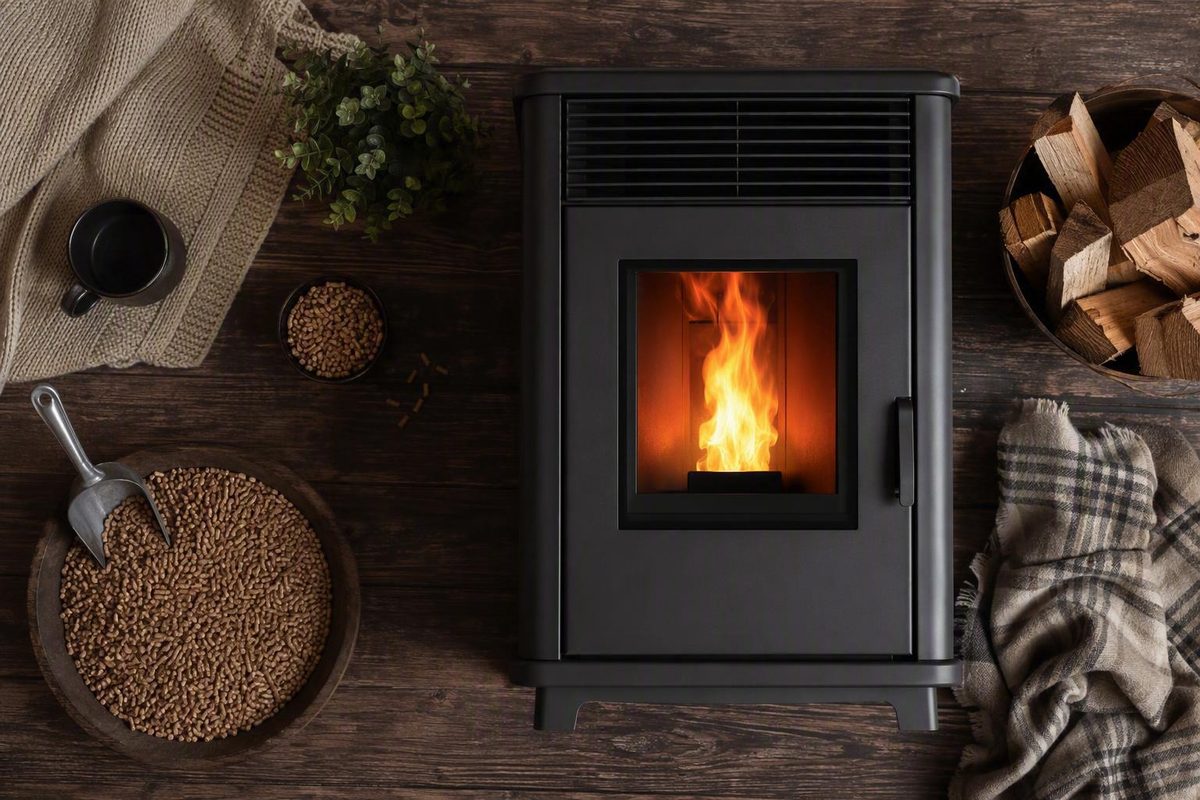
The Harman Absolute63 is intended for homeowners who need more heat than a small room heater can provide, but its largest brochure numbers require careful interpretation. Its certified maximum heat output is lower than the 61,800-BTU figure repeated on many sales pages, and an advertised heating area of up to 3,400 square feet cannot establish whether it will heat a particular house.
The more useful question is whether the stove’s certified output range matches the home’s calculated heat loss—and whether the household is prepared for pellet storage, routine cleaning, electrical dependence, and dealer-based service. Price deserves the same scrutiny: captured retailer listings show a starting price of $6,069, but that does not include every delivery, venting, hearth, electrical, permitting, or installation expense.
This review prioritizes the reviewed manufacturer owner’s manual for certification and safety information, retailer listings for changeable prices and product descriptions, and owner discussions only for anecdotal troubleshooting context. A separate current installation manual, current warranty terms, controls documentation, accessory compatibility information, and official model-specific troubleshooting guidance were not fully verified. Buyers should obtain those documents from Harman or an authorized dealer before making installation, warranty, or service decisions.
Harman Absolute63 at a glance: what it is and who should consider it
The official model name is the Harman Absolute63 Freestanding Pellet Stove. It is a self-contained freestanding appliance, not a pellet insert intended to fit inside an existing fireplace.
Harman approves it for wood pellets only. The reviewed owner’s manual says burning another type of fuel voids the warranty. It also provides the certified output, efficiency, emissions, hopper, electrical, inspection, and mobile-home requirements summarized in this review.The Harman Absolute63 owner’s manual identifies the model, approved fuel, certification figures, electrical requirements, and operating rules.
Its central appeal is straightforward: substantial certified heat output, a hopper that holds more than one standard 40-pound pellet bag, and retailer-described electronic controls intended to automate temperature management and maintenance reminders. Those features do not make it an automatic fit for every large house.
A plausible best-fit home would have:
- A calculated design heating load within the stove’s usable output range
- A layout that allows heat to move reasonably well from the installation room
- A code-compliant location and vent route
- Suitable hearth protection and adequate floor capacity
- Dry storage for a meaningful supply of bagged pellets
- Dependable electrical service and an appropriate outage plan
- Access to a qualified installer and ongoing local service
- Occupants able to lift, carry, store, and pour pellet bags
The ownership commitments matter just as much. A pellet stove requires electricity to operate powered controls, ignition, fuel feeding, and blowers. It also requires recurring burn-pot and ash care, deeper periodic cleaning, exhaust-system inspection, and qualified annual attention. Pellet heat may be more automated than hand-loading cordwood, but it is not maintenance-free central heating. Readers weighing those practical demands may also want this overview of pellet-stove ownership tradeoffs.
Absolute63 at-a-glance summary
Item Best-supported figure or description Appliance type Freestanding pellet stove Certified heat output 10,200–46,400 BTU per hour Fuel-input range 14,100–61,800 BTU per hour Tested efficiency 83.2% LHV; 77.7% HHV Certified particulate emissions 1.4 grams per hour Hopper capacity 72 pounds Approved fuel Wood pellets only Product vent specification 3 inches; final design must follow the separate current installation manual Electrical rating 115 VAC, 60 Hz Approximate electrical draw 3.5 amps at startup; 2.5 amps while running Retailer-listed dimensions About 28-1/16 in. W × 32-9/16 in. H × 29-9/16 in. D Retailer-listed weight 337 pounds from one seller; verify before structural or handling decisions Captured starting price $6,069 before site-specific delivery and installation costs
The quick verdict is that this is a serious space-heating appliance for a potentially substantial load—not a purchase to make from square footage alone. Heat-loss sizing, installation feasibility, service coverage, and total installed cost should be treated as prerequisites rather than afterthoughts.
Certified specifications—and why two different BTU ranges appear online
The most common specification error in Absolute63 listings is treating 61,800 BTU per hour as usable heat output. Harman’s certification information distinguishes between heat entering the appliance in the pellets and heat delivered by the appliance.
The reviewed manual reports an EPA heat-output range of 10,200–46,400 BTU per hour and a fuel-input range of 14,100–61,800 BTU per hour. The larger number describes the calculated energy entering the stove at its maximum feed rate; it does not mean the appliance delivers 61,800 BTU per hour to the room.
| Specification | Figure | Source and interpretation |
|---|---|---|
| EPA heat output | 10,200–46,400 BTU/hr | Certified useful heat-output range |
| Fuel input | 14,100–61,800 BTU/hr | Energy entering in the pellet fuel |
| Tested efficiency, LHV | 83.2% | Lower-heating-value accounting |
| Tested efficiency, HHV | 77.7% | Higher-heating-value accounting |
| Particulate emissions | 1.4 g/hr | Certified emissions rate |
| Emissions-standard statement | Complies with 2020 standards | Manufacturer manual statement |
| Hopper capacity | 72 lb | Official listed capacity |
| Approved fuel | Wood pellets | Other fuels are not approved |
| Product vent specification | 3 in. | Final vent system remains installation-specific |
| Electrical supply | 115 VAC, 60 Hz | Rated supply |
| Startup current | Approximately 3.5 amps | Ignition/startup condition |
| Running current | Approximately 2.5 amps | Normal running figure |
| Dimensions | About 28-1/16 in. W × 32-9/16 in. H × 29-9/16 in. D | Recurring retailer figures; verify before purchase |
| Weight | 337 lb | One retailer’s figure, not a manufacturer-confirmed planning weight |
LHV and HHV are different accounting conventions. Compare HHV with HHV or LHV with LHV; placing one stove’s LHV result beside another stove’s HHV result creates a misleading comparison.
For comparison shopping in the United States, the 77.7% HHV figure may be the more useful figure when competing products also disclose HHV. Even then, a laboratory result does not predict a particular home’s seasonal fuel use. Installation, cleaning condition, operating pattern, pellet characteristics, and building heat loss still matter.
Several retailer listings put the cabinet at approximately 28-1/16 inches wide, 32-9/16 inches high, and 29-9/16 inches deep. One listing also gives a weight of 337 pounds, a 3-inch flue, top- or rear-vent possibilities, and a maximum feed rate of 8 pounds per hour.The Wood Heat listing provides the recurring dimensions, retailer-listed weight, vent configurations, feed rate, price, and options.
Those measurements are useful for preliminary planning, but they are insufficient for laying out a hearth or approving an installation. Clearances, hearth protection, service access, vent geometry, and required components can increase the actual space needed. The reviewed owner’s manual is not a substitute for the separate, current installation manual.
Conflicting retailer figures should be rejected when they disagree with the certification material:
- 61,800 BTU per hour is maximum fuel input, not maximum certified heat output.
- 63,600 BTU per hour is not the supported certified maximum-output figure.
- 85% HHV conflicts with the manual’s 77.7% HHV test result.
- Neither approximately 310 pounds nor 337 pounds should be described as the definitive manufacturer-confirmed weight without current primary documentation.
The distinction matters for sizing. Treating the larger input number as usable output can make the stove appear capable of meeting a building load beyond its certified output.
How much space can the Absolute63 realistically heat?
Retailers advertise the Harman Absolute63 for up to 3,400 square feet. One listing gives an approximate range of 500 to 3,400 square feet but does not supply standardized test conditions for that range.Rettinger Fireplace lists the approximate 500-to-3,400-square-foot range and a 72-pound hopper.
The words “up to” are critical. Another retailer expressly qualifies the 3,400-square-foot figure according to climate and home efficiency. It is therefore a conditional marketing estimate, not a promise that the stove will maintain a selected temperature throughout every building of that size.Fireside Hearth & Home qualifies the coverage estimate by climate and home efficiency.
Two homes with identical floor areas can have very different heating requirements. Real-world fit depends on:
- Local design temperature: Occasional freezing weather creates a different load from prolonged subzero conditions.
- Insulation and air leakage: Poor insulation and uncontrolled infiltration can dominate the heating requirement.
- Ceiling height: Floor area does not capture room volume or exterior wall area.
- Windows and doors: Glazing performance, exposure, area, and drafts affect heat loss.
- Floor plan: Open rooms permit easier heat movement than hallways and closed bedrooms.
- Stove placement: A central location distributes heat differently from a remote corner room.
- Stairwells: They may help warm air rise while leaving same-floor rooms cooler.
- Existing heating zones: A stove may supplement one zone without replacing every other system.
- Installation quality: Vent and combustion conditions can affect operation.
- Pellet characteristics: Density, shape, ash content, and consistency affect feeding and cleaning.
- Heating role: Supplemental heating and whole-home primary heating are fundamentally different jobs.
A generic square-foot rule cannot account for the building variables above.
Output modulation matters at both ends. The stove needs enough maximum output for cold conditions, but it also needs to operate sensibly during milder weather.
A freestanding pellet stove also does not distribute heat like a ducted furnace. Fans, open doors, and natural circulation may help, but they do not convert a room heater into a fully zoned forced-air system.
Owner anecdotes illustrate that limitation without resolving it. In one forum discussion, owners described substantial heat in homes of roughly 1,800 and 2,000 square feet, including a well-insulated two-story home. The same thread included reports of temperature-sensing differences and dirty glass.The owner discussion describes strong heat output alongside different homes, vents, settings, and operating experiences.
Those experiences show that the appliance can produce substantial heat. They do not prove that another 1,800-, 2,000-, or 3,400-square-foot home will perform the same way.
Pre-quote sizing checklist
Before asking whether the stove can “heat the house,” document:
- Calculated design heat loss in BTU per hour
- Outdoor design temperature used in the calculation
- Whether the stove will provide primary, supplemental, or emergency heat
- Rooms that must remain at the target temperature
- Proposed stove location
- Doorways, hallways, stairs, and closed-room constraints
- Desired indoor temperature
- Expected demand during the coldest weather
- Existing furnace, boiler, heat-pump, or other backup capacity
- Whether occupants accept warmer and cooler zones
If a dealer answers a sizing question using only floor area, ask for the assumptions behind that answer. A credible recommendation should connect calculated heat loss with certified output.
Price: starting MSRP versus the fully installed cost
Multiple captured retailer listings show a starting price or MSRP of $6,069. The listings provide no reliable effective date, so that amount is pricing context rather than a universally current offer. It is not evidence of the final delivered, permitted, and installed cost.
One retailer also lists Porcelain Majolica Brown as a $700 finish upgrade, plus optional outside-temperature and outside-air components. Those prices, availability, and compatibility can change and should not be treated as current manufacturer-confirmed terms.
A useful budget separates the appliance price from everything required to place it safely into service.
Installed-cost worksheet
Ask the dealer to itemize:
- Base Absolute63 stove
- Selected color or finish
- Freight, local delivery, and unloading
- Movement into the home
- Dealer installation labor
- Pellet vent, fittings, adapters, supports, and termination
- Top- or rear-vent components, where applicable
- Hearth pad or custom hearth construction
- Wall protection, if required
- Permit and inspection fees
- Electrical receptacle, circuit, or related work
- Surge protection
- Outside-air components, if required
- Floor reinforcement or structural work
- Wall, ceiling, or roof penetrations and weatherproofing
- Removal or disposal of an old appliance
- Startup, commissioning, and owner orientation
- Travel charges
- Initial diagnostic or follow-up visit
- Responsibility for warranty-service labor
Do not assume an online stove price includes any of these items. Vent complexity can differ substantially between sites, and the evidence pack does not support a reliable national installed-price estimate.
The proposal should name the exact model and finish and specify the proposed vent route, nominal diameter, and equivalent vent length. It should also identify outside-air requirements, electrical scope, permits, labor, delivery, disposal, and responsibility for warranty service.
Dealer support is part of the purchase value. A lower quote may not be the better deal if the seller lacks a qualified local technician.
Ask:
- Who performs warranty diagnosis?
- Is warranty labor covered, and for how long?
- What travel charges apply?
- How quickly are winter no-heat calls handled?
- Are common replacement parts stocked locally?
- Will the installer perform startup testing and explain the controls?
- Who verifies the vent calculation against the current installation manual?
- Who provides annual service, and what does it include?
The right cost figure is an itemized local quote for the proposed installation—not an online starting price.
Controls, hopper capacity, and realistic runtime
Retailer descriptions repeatedly highlight EASY Touch controls, programmable thermostat operation, maintenance reminders, and Whisper mode. Third-party maintenance guidance says the touchscreen tracks fuel use and displays prompts for recurring cleaning tasks.
These features may make everyday operation more convenient than a manually controlled solid-fuel appliance. They do not eliminate the need to understand operating modes, observe flame and ash conditions, or respond to maintenance warnings.
“Whisper” is a branded operating-mode description, not an independent acoustic test result. Retailers use phrases such as “near silence” and “whisper-quiet,” but the reviewed evidence provides no measured sound-pressure levels or controlled comparison with competing stoves. The Absolute63 should not be described as silent or objectively quieter than another model.
Anyone sensitive to mechanical sound should hear an operating unit in person. Listen during ignition, low operation, high demand, pellet feeding, blower-speed changes, and shutdown.
The 72-pound hopper is a practical advantage because it holds more than a standard 40-pound pellet bag. That can reduce refill frequency relative to a smaller hopper and may allow the owner to add a full bag before the hopper is nearly empty.
It does not establish a fixed runtime. Using the retailer-listed maximum feed rate of 8 pounds per hour:
72 lb ÷ 8 lb/hr = approximately 9 hours
That is a theoretical capacity calculation, not a typical-use prediction. It assumes that the nominal 72-pound load is usable and that the stove feeds continuously at the listed maximum rate.
Actual time between fills depends on:
- Heat demand and outdoor weather
- Thermostat cycling
- Constant-burn versus room-temperature operation
- Selected temperature or burn setting
- Minimum and average feed rate
- Pellet length, shape, and density
- Pellet consistency and quality
- Usable loaded quantity
- Cleaning condition
- Draft and installation conditions
- How much fuel is added at each refill
Retailer burn-time claims conflict. One page says up to 36 hours, while another comparison page says up to 72 hours. Neither provides comparable conditions, minimum-feed data, room demand, pellet characteristics, or a clear explanation of thermostat cycling. Those figures should not be treated as dependable refill intervals.The retailer comparison illustrates the unsupported 72-hour claim and other figures that conflict with certified specifications.
Ask the dealer for documented minimum-feed data and representative low-, medium-, and high-demand fuel use. Also ask whether any quoted runtime assumes continuous operation or thermostat cycling.
The hopper reduces refill frequency, but it does not remove physical handling. Pellets must remain dry, and owners still have to carry bags, lift them to hopper height, pour them, and manage spills and pellet dust.
Installation, venting, power, and mobile-home rules
Installation must follow the separate current manufacturer installation manual and all applicable local, regional, state, and national requirements. The reviewed owner’s manual directs buyers to consult building or fire officials about restrictions and inspection requirements.
The product specification identifies a 3-inch vent, but that does not mean every installation consists of a 3-inch pipe through the nearest wall. Any diameter change must come from the current installation manual—not generalized pellet-stove advice.
Retailers describe top- or rear-vent configurations as planning possibilities. Confirm the exact components available for the selected unit before designing a hearth or opening a wall.
A pre-purchase site visit should address:
- Appliance and vent clearances
- Hearth dimensions and required protection
- Service and cleaning access
- Vent route and equivalent vent length
- Approved wall, ceiling, or roof penetrations
- Termination location
- Clearance from doors, windows, air intakes, grade, and other features
- Combustion-air requirements
- Electrical receptacle location
- Floor capacity
- Safe delivery route
- Future access for vent cleaning
- Permit and inspection responsibility
The retailer-listed weight of 337 pounds is sufficient to flag handling and structural questions, although it should be verified before final planning. The dealer should explain how the stove will be unloaded, moved across floors or stairs, and placed without harming the building or appliance.
The rated electrical supply is 115 VAC at 60 Hz, with approximate draw of 3.5 amps during startup and 2.5 amps while running. The reviewed manual recommends a grounded receptacle and surge protection for the circuit board.
Electricity is operationally essential for powered controls, ignition, pellet feeding, and blowers. During an outage, the Absolute63 cannot be treated like a conventional non-electric wood stove. An outage plan should address safe shutdown, expected outage duration, and backup heat.
Mobile and manufactured homes have specific documented restrictions. The stove may not be installed in a sleeping room; outside combustion air and a Harman Outside Air Kit are required; the stove must be grounded to the home’s frame; and the floor, walls, ceiling, and roof must retain structural integrity. These requirements, along with the electrical, inspection, and installation rules, appear in the reviewed owner’s manual.See the manufacturer’s owner’s manual for mobile-home restrictions, electrical requirements, inspection rules, creosote guidance, and ash-disposal precautions.
Outside air should not be treated as universally optional or universally mandatory in every other building.
Installation-readiness checklist
Take these questions to the dealer or inspector:
- Do you have the current installation manual revision for this exact unit?
- What are the required appliance and vent clearances?
- What hearth dimensions and protection are required?
- Is the proposed configuration top-exit or rear-exit?
- What is the calculated equivalent vent length?
- Does the design require a diameter change?
- Where will the vent terminate?
- Is outside combustion air required or recommended?
- Can the floor support the appliance and hearth assembly?
- Is there sufficient cleaning and service access?
- Where will grounded power and surge protection be located?
- What permits and inspections apply?
- How will outage shutdown and backup heat be handled?
- For a mobile or manufactured home, how will outside air, frame grounding, structural integrity, and the sleeping-room prohibition be documented?
Do not order the stove until the site can support a compliant installation and the complete scope is recorded in writing.
Cleaning and maintenance: weekly, per-ton, seasonal, and annual work
Absolute63 maintenance is best understood in four layers: frequent reminder-based care, deeper cleaning after substantial fuel use, in-season exhaust checks, and qualified annual inspection. Actual intervals may be shorter when fuel, ash, draft, or operating conditions require it.
A third-party Absolute43/Absolute63 maintenance guide describes three EASY Touch prompts:
- Scrape Burn Pot and Reset
- Empty Ash Pan and Reset
- Total Clean and Reset
The guide places the burn-pot and ash-pan prompts at approximately one week of operation and the total-clean prompt after roughly one ton of pellets. These are approximate reminders, not permission to ignore visible buildup until the screen requests service.The Absolute-series maintenance guide explains the prompts, approximate intervals, cleaning areas, and procedural warnings.
Frequent or reminder-based care
Routine owner work may include:
- Observing flame and glass condition
- Scraping the burn pot as directed
- Keeping burn-pot holes clear
- Emptying the ash pan
- Watching for unusual soot or ash accumulation
- Cleaning fully cooled glass by an approved procedure
- Resetting the relevant reminder after completing the task
Follow the current instructions for shutdown and cooling. Hot glass and metal can cause burns, and liquid must not be sprayed onto hot glass. If a procedure cannot be performed as written, stop and contact the dealer rather than improvising.
Approximately per-ton deep cleaning
The third-party guide’s total-clean procedure includes:
- Heat exchanger
- Burn pot and burn-pot holes
- Blower wheel
- Flue
- Ash area
- Glass
- Absolute63 igniter area
The guide warns that pushing a flue brush too far can damage the exhaust-sensing probe. It also directs users to shut down and cool the stove completely before a total cleaning and to reseal the igniter-area cleanout correctly afterward.
A one-ton prompt is a useful planning milestone, but it is not an absolute interval.
In-season exhaust inspection
The exhaust path accumulates fly ash and can develop creosote under unfavorable conditions. The reviewed manual calls for at least annual exhaust-system inspection and periodic checks during the heating season. A creosote layer of 1/8 inch or more should be removed to reduce chimney-fire risk.
Vent work can involve difficult access and sensitive components. A household vacuum, leaf blower, aggressively inserted brush, or improvised off-season treatment should not be assumed safe or manufacturer-approved. One owner video describes placing a moisture absorber in the stove, sealing an exterior vent with plastic, and using a leaf blower, but that anecdote does not establish an approved procedure.
Annual qualified inspection
The appliance should be inspected before use and at least annually by a qualified service person. Annual work should not be reduced to cleaning the visible firebox; the technician should follow current manufacturer procedures and inspect areas outside ordinary owner maintenance.
- Electrical diagnosis or rewiring
- Control-board replacement
- Unsupported software or configuration changes
- Combustion adjustment
- Sensor substitution or diagnosis
- Changes to factory minimum-burn settings
- Unapproved vent modifications
- Repairs involving uncertain gaskets, seals, or safety controls
Ash disposal
Ash may retain heat after it appears cool. Place it in a tightly covered steel or other metal container on a noncombustible surface, away from combustible materials, until completely cool. Do not put warm ash in cardboard, plastic, or a combustible trash container.
| Interval | Typical attention |
|---|---|
| Frequently and when prompted | Observe flame, scrape burn pot, check holes, manage ash, inspect glass |
| About weekly under the third-party reminder description | Burn-pot and ash-pan care, adjusted for actual buildup |
| Around one ton of fuel, or sooner if needed | Total cleaning of combustion, heat-transfer, ash, blower, flue, glass, and igniter areas |
| During the heating season | Periodic exhaust-path checks |
| At least annually | Qualified appliance and exhaust-system inspection and service |
The screen is a reminder system, not a substitute for observation. Weak or abnormal flame, excess soot, delayed ignition, unusual feeding, changed blower sound, or other abnormal behavior should be investigated before the next scheduled milestone.
Owner-reported problems: dirty glass, temperature sensing, and delayed shutdown
Online discussions can identify symptoms worth raising with a dealer, but they cannot establish failure rates. The available Absolute63 threads contain self-selected reports from owners with different pellets, vent systems, homes, settings, maintenance histories, and service support.
Rapidly dirty or cloudy glass
Several owners have reported glass becoming cloudy or dirty within hours or days. Reports appeared with different pellet choices and both 3-inch and 4-inch vent descriptions. Participants proposed hotter operation, pellet quality, venting, low burns, or combustion conditions as possible influences.
The discussion established no definitive cause or verified remedy. It would be inaccurate to say either that rapid fouling is unavoidable or that one pellet, vent arrangement, or operating change will solve it.
A light cosmetic haze differs from heavy black soot, weak or unusual flame, smoke leakage, or a rapid change in normal operation. Persistent soot or abnormal combustion behavior warrants inspection. Owners should not make undocumented combustion-air adjustments based on forum advice.
Temperature-sensing discrepancies
One owner described a difference between the temperature shown by the stove and the temperature perceived in the room. Third-party troubleshooting guidance suggests first confirming whether the sensed temperature already satisfies the setpoint, then checking sensor connections, wire condition, and placement near sunlight or another heat source.The Absolute63 support resource outlines preliminary room-temperature sensor and placement checks.
Those checks are preliminary, not a diagnosis. Room stratification, sensor placement, operating mode, installation conditions, and component faults can create superficially similar symptoms. Persistent discrepancies require qualified evaluation.
Continued feeding or delayed shutdown
An isolated forum thread includes owners who said the stove continued feeding at a low indicated rate after reaching the set temperature or after being turned off. They described attempts involving cleaning, changing pellets, replacing an exhaust-sensing probe, updating software, or replacing a control board. The thread did not document a confirmed cause or a consistently successful repair.
Another Absolute63 owner in the same discussion reported normal shutdown behavior. That contrary experience does not invalidate the complaints, but it demonstrates why the thread cannot establish a universal model flaw.The shutdown discussion includes unresolved feeding complaints and a contrary report of normal shutdown.
The current manual and a trained technician should determine whether observed behavior is expected or abnormal.
Before contacting service, document:
- Exact operating mode
- Temperature setpoint
- Displayed room temperature
- Time the setpoint was reached
- Time the off command was given
- How long feeding, flame, and blowers continued
- Displayed feed percentage, if available
- Error or status messages
- Pellet brand and recent fuel changes
- Date and scope of the last cleaning
- Vent-cleaning history
- Recent service or parts replacement
- Software information visible through approved menus
- Model and serial numbers
- Photos or video showing the display and flame over time
Do not replace a sensor, control board, or other component merely because someone mentioned it online. The same visible symptom can have multiple causes, and unverified repair attempts can add cost without resolving the problem.
Buying verdict and pre-purchase checklist
The Harman Absolute63 merits consideration when its certified output matches a professionally calculated heating load and the household accepts the practical realities of pellet heat. It is not a universal recommendation for every large home.
Its strongest supportable attributes are:
- Certified output up to 46,400 BTU per hour
- A 72-pound hopper
- Retailer-described touchscreen and programmable controls
- Third-party-described maintenance prompts and fuel tracking
- Tested efficiency of 77.7% HHV
- Certified particulate emissions of 1.4 grams per hour
- A broad certified output range for a potentially substantial space-heating load
The main decision risks are:
- A high starting stove price before installation
- Site-specific coverage that cannot be predicted from floor area
- Potentially significant delivery, venting, hearth, permit, and labor costs
- No independent noise measurements
- Electricity dependence
- Recurring cleaning and pellet-handling work
- Anecdotal complaints without known prevalence or a confirmed common cause
- Unverified current warranty terms and accessory compatibility
- Dependence on competent local diagnosis and service
If possible, see and hear an operating Absolute63 before buying. Consider blower sound, pellet-feed noise, touchscreen operation, heat intensity near the appliance, and the shutdown sequence. Specifications cannot settle subjective comfort.
Dealer-question checklist
- What is the home’s calculated design heat loss?
- How does that load compare with the certified 10,200–46,400-BTU output range?
- Is the stove intended as primary or supplemental heat?
- What complete installed price applies to this site?
- Which current owner and installation manual revisions apply?
- What clearances and hearth dimensions are required?
- What is the proposed vent route and equivalent vent length?
- Is a diameter change required?
- Is outside combustion air required here?
- What electrical work and surge protection are included?
- What is the outage plan, and how should shutdown be handled?
- What are the current written warranty terms?
- Who pays warranty labor and dealer travel?
- What software or control revision will the delivered stove have?
- How quickly does the dealer respond during heating season?
- Which replacement parts are stocked locally?
- What does annual service include, and what does it currently cost?
- Which accessories are confirmed compatible with this exact unit?
- Who obtains permits and arranges inspection?
- What owner training is provided at commissioning?
Dealer and service pages link to owner, installation, brochure, quick-start, maintenance-video, and service-parts resources. Higgins Energy, for example, maintains an Absolute-series resource page with cleaning and touchscreen videos plus model-document links.Higgins Energy collects Absolute-series service videos and model-document links.
Verify the revision and exact model applicability of every document. The current owner and installation manuals should take priority over retailer copy, forum fixes, or generalized pellet-stove advice.
Current tax-incentive eligibility, warranty coverage, accessory compatibility, software status, and regional service availability remain date-specific questions. Confirm them before signing a contract rather than assuming an older certificate, captured retailer page, or online comment remains applicable.
The final verdict is conditional but clear: the Absolute63 has credible certified performance and useful convenience features. Neither its largest retailer claims nor a handful of forum complaints should decide the purchase. Size it from the home’s calculated heat loss, obtain a complete installation quote, confirm current manuals and warranty terms, assess local service, and be realistic about pellet handling, cleaning, and electricity dependence.
Harman Absolute63 FAQ
How many square feet can the Harman Absolute63 heat?
Retailers advertise up to 3,400 square feet, with one giving an approximate 500-to-3,400-square-foot range. That is a conditional marketing estimate, not a guarantee.
Use the certified 10,200–46,400 BTU-per-hour output range in a professional heat-loss calculation. Climate, insulation, leakage, ceiling height, layout, placement, and the intended heating role determine real-world fit.
What is the difference between the Absolute63’s 46,400 BTU output and 61,800 BTU input figures?
61,800 BTU per hour is maximum fuel input—the calculated energy entering the stove in the pellets. 46,400 BTU per hour is the certified maximum heat output.
Use certified output, not the larger fuel-input number, when comparing the appliance with a building’s heating load.
How long will a 72-pound hopper last?
There is no single dependable interval. At the retailer-listed maximum feed rate of 8 pounds per hour, a nominal 72-pound load produces a theoretical maximum-feed runtime of about nine hours.
Actual runtime varies with demand, thermostat cycling, operating mode, pellets, cleaning condition, and usable hopper load. Retailer claims of up to 36 or 72 hours lack comparable test conditions and are not guarantees.
How often does a Harman Absolute63 need to be cleaned?
Third-party guidance describes burn-pot and ash-pan reminders after roughly one week of operation and a total-clean reminder after approximately one ton of pellets. Actual buildup may require more frequent work.
The exhaust path also needs periodic in-season checks, while the appliance and exhaust system require at least annual qualified inspection. Visible soot, abnormal flame, delayed ignition, or operating changes should take priority over a reminder schedule.
Do dirty glass or continued-feeding reports prove that the Absolute63 has a model-wide defect?
No. Forum owners have reported rapid glass clouding, temperature differences, and continued feeding or delayed shutdown, but those anecdotes do not establish prevalence, a common cause, or a model-wide defect. The shutdown discussion also contains a report of normal behavior.
Document persistent black soot, abnormal flame, temperature-control problems, or unusual feeding and shutdown behavior and refer them to a qualified service provider. Do not assume that a forum-recommended sensor, software update, control board, or combustion adjustment is the correct repair.