
Hardwood Pellet Fuel Is Not Automatically the Better Buy
Compare hardwood pellet fuel by stove approval, quality controls, heat value, ash, moisture and delivered cost—not the hardwood label alone.
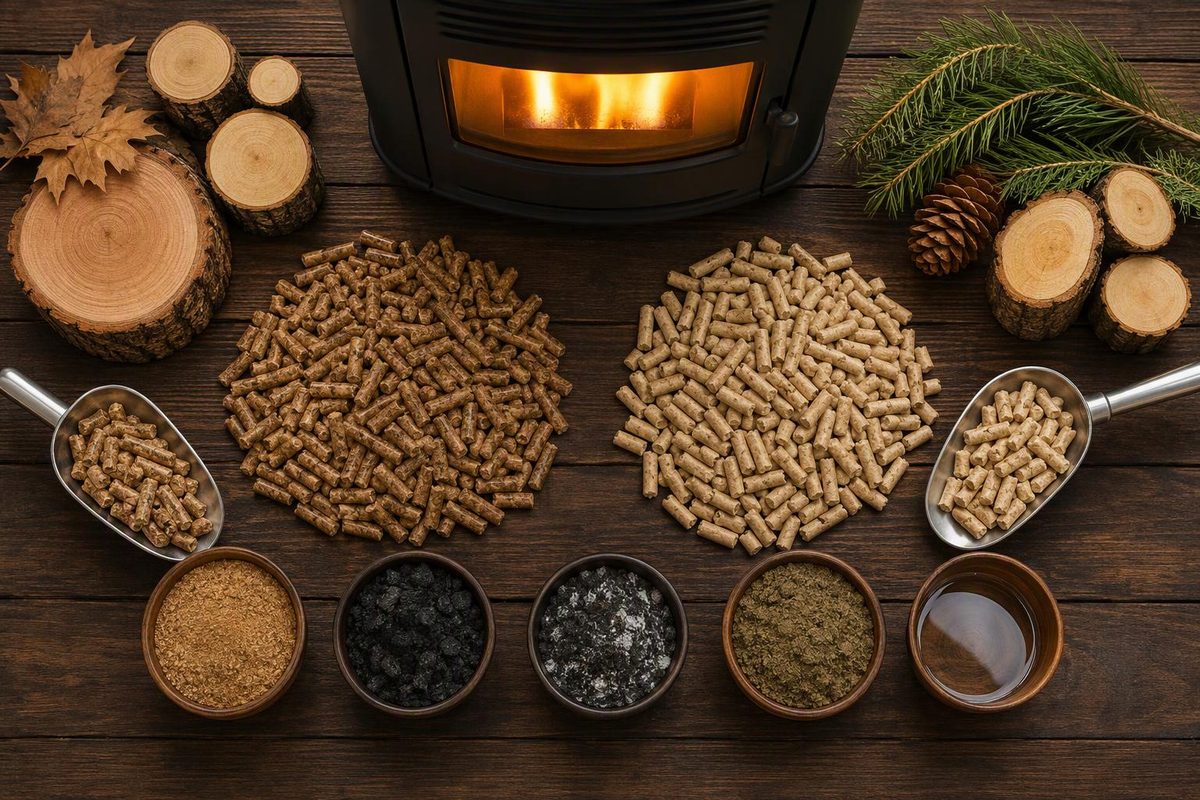
Hardwood pellet fuel can be an excellent choice, but “hardwood” is not a quality grade. A well-made softwood or blended pellet may produce more heat, leave less ash or cost less per unit of heat than a bag labeled 100% hardwood. Follow the appliance manual first, then compare measured fuel properties and delivered price.
Enter an offer’s delivered price and heat value to calculate its gross cost per million Btu.
Pellet Heat-Cost Calculator
Default values use the hypothetical hardwood offer shown in the article.
Add appliance efficiency
Calculated Result
Source note: Calculations use 2,000 lb per ton and the article’s gross-cost formula. The default offer is hypothetical; appliance efficiency is user-supplied.
The Firewood Rule Does Not Transfer to Pellets
With cordwood, dense hardwood generally supplies more heat per unit of stacked volume than a lighter softwood. Pellets change the comparison because the wood is dried, ground and compressed into a relatively uniform product—and consumers buy it by weight.
University of Missouri Extension reports that a pound of oven-dry hardwood contains about 8,600 Btu, while resinous softwood averages slightly higher at 9,050 Btu per oven-dry pound. Its general estimate for manufactured wood pellets is roughly 7,750 Btu per pound after accounting for their moisture content (University of Missouri Extension).
The Vermont Department of Forests, Parks & Recreation says high-quality pellets can be hardwood, softwood or a blend. Its guide says softwood pellets generally have higher heat output and lower ash, but recommends experimenting to learn what burns best in the appliance (Vermont wood-pellet buying guide).
That does not make softwood universally better. It means species alone cannot settle the purchase.
The Appliance Manual Comes First
Fuel approval varies by appliance. The Englander 25-CBPAH manual, for example, approves wood pellets only and specifies Premium-grade pellets (Englander 25-CBPAH manual). Other appliances may permit different pellet grades or approved biomass mixtures.
Use the manual for your exact model and serial range. A hardwood claim does not override its restrictions on fuel type, grade or dimensions. Our broader pellet fuel selection guide explains how to check those requirements before comparing brands.
For a central pellet boiler, use the boiler manufacturer’s fuel specification and the bulk supplier’s analysis. Do not assume a bagged stove pellet is suitable for a bulk-fed boiler merely because both products are made from wood.
Documented Quality Controls Matter More Than Species
The Pellet Fuels Institute’s published 2011 specification determines fuel grade using fines, bulk density, diameter, length, chloride, moisture, durability and inorganic ash. Heating value is tested and must be disclosed as a minimum guarantee on quality-marked fuel, but the specification does not set a heating-value threshold for each grade (PFI standard specification).
PFI says facilities participating in its current Standards Program undergo regular third-party inspection and laboratory testing. Bags from qualified producers carry the program’s Quality Mark; the word “premium” by itself does not identify participation in that program (PFI Standards Program).
A quality mark cannot guarantee that one pellet will perform best in every stove, but it provides more information than a hardwood claim alone.
Compare Heat Value, Ash, Moisture and Durability
Compare the following figures when the producer supplies them on a consistent basis.
Heating Value
Prefer an “as received” figure when comparing bags. A moisture-free figure excludes the water present in the product and can make unlike fuels appear more similar. Vermont’s guide identifies 8,000–8,400 Btu per pound as a strong as-received range.
Check whether the listed figure is a minimum, an average or a typical value. Two numbers calculated on different bases are not a reliable head-to-head comparison.
Ash Content
Lower ash generally means less material to remove and potentially longer intervals between cleanings. Actual cleaning frequency still depends on the stove, its settings and how it is operated.
Moisture
Water uses heat during combustion. Damp pellets can also soften or break down and feed poorly. A low price does not compensate for bags that have taken on water in storage.
Fines, Durability and Dimensions
Excess dust, fragile pellets or pieces outside the appliance’s specified dimensions can interfere with consistent feeding.
The Harman Advance manual illustrates the practical effects. It says higher-ash fuel requires more frequent ash removal and burn-pot scraping, damp pellets can revert to sawdust that does not flow properly, and pellets longer than 1½ inches can cause inconsistent feeding or ignition. It also recommends trying brands before buying multiple tons (Harman Advance manual).
Those instructions apply to that model, but they show why the same properties should be checked against any stove’s own manual.
Compare Cost Per Unit of Heat, Not Price Per Bag
For a first-pass comparison, calculate gross fuel cost per million Btu. The formula is delivered price per ton divided by Btu per pound multiplied by 2,000, then divided by 1,000,000.
Consider two hypothetical offers:
| Fuel | Delivered Price | Heat Value | Gross Cost/MMBtu |
|---|---|---|---|
| Hardwood pellet | $360/ton | 8,200 Btu/lb | $21.95 |
| Softwood pellet | $390/ton | 8,600 Btu/lb | $22.67 |
Here the hardwood pellet is slightly cheaper per gross MMBtu despite its lower listed heat value. The softwood’s higher Btu figure does not overcome its higher delivered price in this example.
This is a screening calculation, not a complete heating-cost result. To estimate cost per useful MMBtu, account for the appliance’s efficiency. Actual performance can also vary with the fuel, appliance condition and operating settings.
Include costs missing from the bag price: delivery, pallet or deposit fees, pickup fuel, damaged bags and any meaningful difference in cleaning burden. A low-ash pellet carrying a modest premium may be worthwhile in a stove that is difficult to clean, but not in every household.
Test Several Bags Before Buying a Ton
Purchase several bags, ideally from the lot you could later buy by the ton. Under reasonably similar weather and heat settings, track:
- bags consumed over a set period;
- whether the stove maintains the target temperature;
- ash after a known number of bags;
- glass darkening and burn-pot deposits;
- ignition or feeding trouble; and
- fines left in the bags.
Do not change feed or combustion settings outside the manual’s instructions merely to make unsuitable fuel work. A pellet that requires unauthorized adjustments is not a good match, regardless of species or price.
The best trial compares pellets under similar conditions. A cold, windy week cannot be compared directly with a mild week based only on bags consumed. Ash after a fixed number of bags and recurring feed problems are usually easier to compare consistently.
Dry Storage Protects the Purchase
Keep test bags and any later bulk purchase dry. Vermont recommends indoor storage away from flooding, mold and excessive humidity. If outdoor storage is unavoidable, elevate the bags and cover them securely.
Inspect the wrapping before accepting a pallet. Torn covers, swollen bags or pellets that have broken down into loose sawdust can erase the savings from a discounted ton.
Choose hardwood pellet fuel when it meets the exact appliance requirements, offers competitive delivered cost per useful heat and performs cleanly in a trial burn. Do not pay more solely for the word “hardwood.”