
Canadian Pellets Avoid the New 50% U.S. Duty
Canadian wood pellets under HTS 4401.31 are absent from Annex II. See which wood fuels face the new 50% Section 338 duty and what to verify.
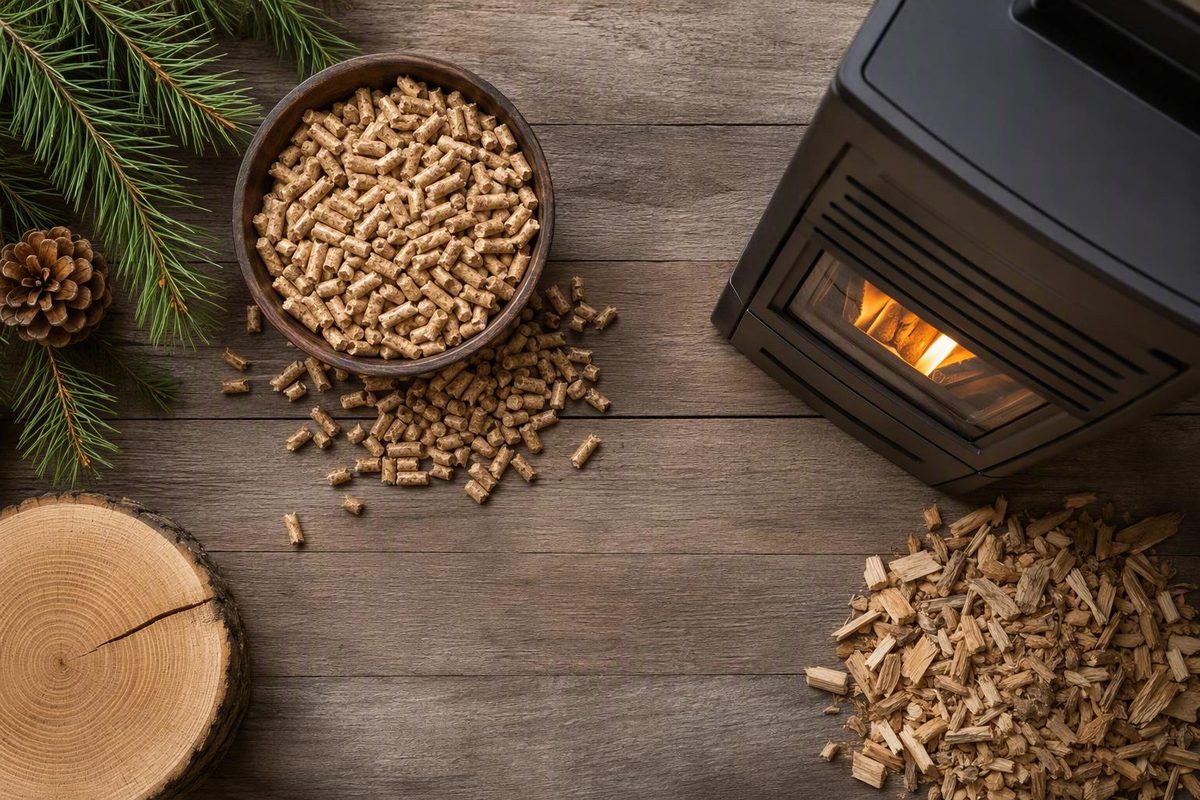
No. Bagged Canadian wood pellets correctly classified under HTS 4401.31 are not on Annex II and do not carry the new 50% Section 338 additional duty when entering the United States. The list includes 4401.12.00 for qualifying non-coniferous fuel wood, along with specified plywood and fence pickets, but it does not include “wood pellets” or 4401.31. That verdict covers this particular additional duty, not every possible customs charge or a product classified somewhere else.
Choose the product and trade direction; the lookup shows the supported tariff code, Annex II status, and what still needs verification.
Select what is crossing the border and in which direction. The result covers the special tariff measures reviewed through August 26, 2026.
Annex II does not list “wood pellets” or 4401.31. Confirm the complete current HTSUS number and that the merchandise fits the pellet classification.
Does the Product Fit the Reviewed Pellet Description?
Enter known specifications. The archived Canadian description allows no more than 3% binder by weight, 25 mm diameter, and 100 mm length.
Specification check: enter one or more values to compare them with the reviewed limits.
| Product | Starting Code | U.S. Annex II | Supported Result |
|---|---|---|---|
| Softwood pellets | 4401.31 | Not listed | No additional 50% duty if correctly classified |
| Hardwood pellets | 4401.31 | Not listed | No additional 50% duty if correctly classified |
| Compressed wood bricks | — | Not established | Classification required; do not assume pellet treatment |
| Non-coniferous firewood | 4401.12.00 | Listed | 50% additional duty for covered Canadian goods |
| Pellet stove | — | Not established | Separate classification and Annex II check required |
| Stove vent pipe | — | Not established | Separate classification and Annex II check required |
Sources: U.S. Section 338 proclamation and Annex II; archived Canadian Chapter 44 pellet specifications; Canadian February 2025 tariff backgrounder. An em dash means the reviewed material does not supply a supported code.
Canadian Pellets Are Outside the Section 338 List
The United States imposed an additional 50% ad valorem duty on Canadian goods covered by the HTSUS provisions in Annex II. The duties took effect at 12:01 a.m. Eastern time on August 22, 2026, following a temporary delay from the date printed in the original annex. The proclamation establishes the Section 338 measure, while the later implementation record and legal summary report the August 22 start. The Federal Register published the temporary-suspension notice, and the legal update describes the delayed effective date.
Coverage depends on exact tariff provisions, not on whether an item is broadly described as a wood product. Annex II does not contain the phrase “wood pellets” and does not list 4401.31. It does list 4401.12.00, but that nearby wood-fuel provision cannot be used to pull pellets into the measure.
| Canadian Product | Starting Code | In Annex II? | Section 338 Result |
|---|---|---|---|
| Qualifying wood pellets | 4401.31 | No | No additional 50% duty |
| Non-coniferous fuel wood | 4401.12.00 | Yes | Additional 50% duty |
| Specified plywood | Varies | Yes, listed lines | Additional 50% duty |
| Specified fence pickets | Varies | Yes, listed lines | Additional 50% duty |
A tariff annex assigns a consequence to merchandise already classified under a listed provision. It does not reclassify a product because another code from the same chapter appears in the annex.
For a normal bag of Canadian heating pellets, the practical result is therefore straightforward: if the pellets are properly classified under 4401.31, they enter without this new 50% duty. Packaging them in bags rather than shipping them in bulk does not, by itself, put 4401.31 on Annex II.
HTS 4401.31 Covers Qualifying Wood Pellets
Canada’s archived 2024 Chapter 44 schedule places qualifying wood pellets under subheading 4401.31. The classification covers specified wood-processing by-products agglomerated by compression, either without an added binder or with no more than 3% binder by weight. It describes cylindrical pellets no more than 25 millimetres in diameter and 100 millimetres long. The archived Chapter 44 schedule contains those specifications.
That archived Canadian schedule is a classification starting point rather than a binding U.S. ruling. Harmonized System codes align internationally through six digits, but each country can add national digits. Canada’s HS guidance explains the six-digit structure and national extensions.
The distinction matters because 4401.31 is only the six-digit starting code. A U.S. importer must confirm the complete current HTSUS number used on the entry. The product’s composition and physical form must also fit that classification.
Softwood and hardwood heating pellets can both start under 4401.31 when they meet the applicable specifications. The Annex II result does not change merely because a bag is labeled hardwood, softwood, premium, heating fuel, grilling fuel, or bedding. Those descriptions may help identify the merchandise, but customs classification follows the product’s actual characteristics and the operative tariff language.
Compressed wood bricks require separate attention. They may look like oversized pellets and may be sold beside pellets, but the archived pellet definition specifies cylindrical dimensions. The reviewed documents do not provide a supported tariff code for bricks, so they should not be assigned 4401.31 solely from their retail category.
The same caution applies to blended biomass, unusual additives, high binder content, industrial feedstock, absorbent products, and other goods marketed with the word “pellet.” If the goods do not fit 4401.31, their absence from Annex II under that code does not answer whether another listed provision applies.
Code 4401.12.00 Does Not Include Pellets Automatically
Annex II lists 4401.12.00, which covers qualifying non-coniferous fuel wood. That listing is why cordwood can face the 50% Section 338 duty even though ordinary heating pellets do not.
The two provisions are not interchangeable:
- 4401.12.00 is the listed provision for qualifying non-coniferous fuel wood.
- 4401.31 is the starting subheading for qualifying wood pellets.
- Only the first of those provisions appears in the reviewed Annex II.
An importer cannot choose between them according to the better duty result. Classification is determined first from the merchandise, tariff text, legal notes, interpretive rules, and relevant rulings. Annex II is checked afterward.
A pallet of bagged pellets should therefore not receive the 50% duty merely because both pellets and cordwood are burned for heat. Conversely, material sold as “pellet fuel” cannot claim the 4401.31 result if its characteristics place it under another provision.
Stoves, Vent Pipe, and Wood Bricks Need Their Own Codes
The pellet exemption does not extend automatically to everything on the same dealer invoice. A shipment might include a stove, vent components, hearth accessories, compressed bricks, and pellet fuel, each requiring its own classification.
The reviewed Annex II evidence supplies a supported answer for 4401.31 pellets and listed 4401.12.00 fuel wood. It does not supply tariff codes for pellet stoves, vent pipe, or compressed wood bricks. Those products are marked as unknown in the lookup rather than being assigned unsourced codes.
This separation matters when a Canadian dealer ships a package order. The pellet portion may avoid the Section 338 duty while another line item receives different treatment. Customs classification and entered value need to be established for each product rather than for the order as a whole.
The Tariff Direction Changes the Answer
“Canada tariff list” can refer to two different border transactions:
- Canadian-origin pellets entering the United States, where the U.S. Section 338 measure is relevant.
- U.S.-origin pellets entering Canada, where Canadian tariffs or counter-tariffs are relevant.
The clear 4401.31 verdict applies to the first direction. Canadian pellets entering the United States are not shown in Annex II and therefore avoid that additional 50% duty when correctly classified.
Canada’s separate 25% tariff announced for listed U.S.-origin goods took effect February 4, 2025. The available extract does not show “wood pellets” or 4401.31, but the extract reviewed here is incomplete. The government backgrounder says coverage is determined at the tariff-item level and applies to goods originating in the United States under the specified marking rules. The February 2025 backgrounder explains the list and origin conditions.
Canada’s further counter-tariffs were scheduled to begin September 8, 2026. The reviewed industry summary identified specified lumber and plywood products but did not identify wood pellets or 4401.31. Because that date was still in the future on August 26, the final Department of Finance list and CBSA implementation notices remain necessary for a shipment entering Canada on or after September 8.
The available record therefore does not establish a categorical exemption for U.S.-origin pellets entering Canada. It establishes only that pellets were not identified in the limited material reviewed. Importers using the lookup for that direction receive an “official list must be checked” result rather than a duty-free verdict.
Origin also is not necessarily the same as shipping location. Pellets dispatched from a U.S. warehouse may have been manufactured in Canada or elsewhere. A seller’s address, invoice location, warehouse, or departure point does not alone settle customs origin.
Confirm Five Facts Before Accepting a Tariff Surcharge
A dealer, importer, or commercial buyer should be able to connect a claimed surcharge to a specific shipment and tariff provision. The necessary record is narrow and concrete.
First, identify the destination. U.S. entry requires the current HTSUS, Annex II, amendments, and CBP implementation instructions. Canadian entry requires the current Canadian Customs Tariff, Department of Finance lists, and CBSA notices. CBSA provides the current tariff files and related resources.
Second, establish origin under the rules for the measure. Keep the producer’s identity, manufacturing location, origin statement, and supporting records. Do not substitute the seller’s location for the origin analysis.
Third, document the merchandise. For pellets, retain the feedstock, binder percentage, additives, diameter, length, manufacturing process, packaging, and commercial description. These details determine whether 4401.31 is supportable.
Fourth, confirm the complete national tariff number. Searching only “wood pellets” can miss a list written mainly in codes. Searching only 4401.31 can miss a national extension or an amendment written under a longer provision. Search the verified code, punctuation variants, and product wording.
Fifth, record the entry date. The Section 338 duty began August 22, while Canada’s announced 2026 counter-tariffs were scheduled for September 8. Warehouse withdrawal dates, in-transit rules, exclusions, suspensions, or later amendments can change treatment around an effective date.
For a recurring or high-value shipment, a customs broker should review the classification, origin, entry date, and operative notices. A formal ruling may be appropriate when the product has unusual dimensions, binders, additives, or mixed biomass.
Pellet Prices Can Move Without a Direct Pellet Tariff
The absence of 4401.31 from Annex II means a seller should not describe the new 50% Section 338 duty as a direct tariff on correctly classified Canadian pellets. It does not guarantee that retail pellet prices will remain unchanged.
Pellet plants often use residues from sawmills and other wood processing. Tariffs affecting listed lumber, plywood, fence products, or other wood goods can alter mill activity and the availability or movement of those residues. The reviewed evidence does not quantify that effect, establish that it has occurred, or provide a resulting price increase.
Freight, exchange rates, inventory timing, producer output, and dealer margins can also change the bag or ton price independently. Existing inventory already inside the country may have a different cost basis from a later cross-border load.
A 50% border duty also would not translate automatically into a 50% retail increase even for a listed product. The sources do not provide the shipment’s entered value, freight, margins, inventory timing, sourcing, or pass-through rate. No supported consumer-price figure is available.
Buyers comparing fall orders can ask whether the pellets were manufactured in Canada, whether the quote covers inventory already in the United States, and which tariff provision supports any stated surcharge. They can then compare the delivered ton price using the bag count for the specified ton and bag size.
For ordinary Canadian heating pellets under 4401.31, the defensible answer remains narrow: Annex II does not list them, so the new Section 338 measure does not add 50% to their U.S. customs treatment. Product classification, origin, timing, and separate border charges still need to be verified for the actual shipment.